It is a good idea to establish a regular grooming routine as part of your daily preparation and self-care. Getting a fresh scent is not always as easy as simply applying your favourite fragrance before you leave. A number of men use several grooming products, such as antiperspirant or deodorant, before applying perfume.
The purpose of deodorant is to stop body odour and to control sweat; many of these products include strong artificial smells designed to cover up natural sweating. There is a problem when a deodorant with a strong aroma is used together with a complicated perfume, the result being that the mixture tends to have a chemical odour which may be unpleasant for colleagues or strangers. The key to achieving a professional appearance is learning how to use perfume in combination with deodorant.

Understanding the Chemistry of Scent Competition
To resolve this issue it is necessary to understand how products interact with the body; the molecules in perfume evaporate in stages according to their weight, since the liquids are mixed and then change over several hours as a result of reacting to the heat of the skin.
Deodorants are designed to provide long-lasting protection and immediate coverage of odours. They contain thick aromatic substances together with ingredients such as aluminium salts or baking soda—these are applied under the arms, a warm section of the body. Because of the heat in that area, any smell present there will spread during the day. If a strong deodorant and a perfume are both released at the same time, the nose cannot tell the two apart and the opposing odours mask the more delicate characteristics of the perfume.
The Power of the Unscented Baseline
The best method of avoiding fragrance conflicts is to use an unscented deodorant or antiperspirant, since switching to a product that has no smell gets rid of the competing chemicals in the underarm area.
It is widely thought that unscented products are not as good at stopping odour or sweat. The ingredients which prevent sweat have nothing to do with the added fragrance oils. An unscented antiperspirant is just as effective at blocking sweat glands as a scented one. Natural deodorants that use magnesium or zinc kill the bacteria without leaving any smell. Since an unscented product offers a neutral base, a perfume is able to be smelled clearly.
Matching Grooming Lines & Perfume Accessories
Buying scented products that belong to the same fragrance range will result in a harmonious combination. For example, many luxury brands produce body care products such as stick deodorants and shower gels to match their perfumes. Men exploring different fragrance options can compare mens cologne selections to find scents that suit their grooming preferences.
Deodorants designed to go with a particular perfume are made to be chemically compatible, with the manufacturers adjusting the ingredients so that they match the base note of the main fragrance. Although these branded deodorants are more expensive than those available in supermarkets, they offer a consistent experience when used at formal occasions or on a daily basis.
Application Techniques & Spatial Separation
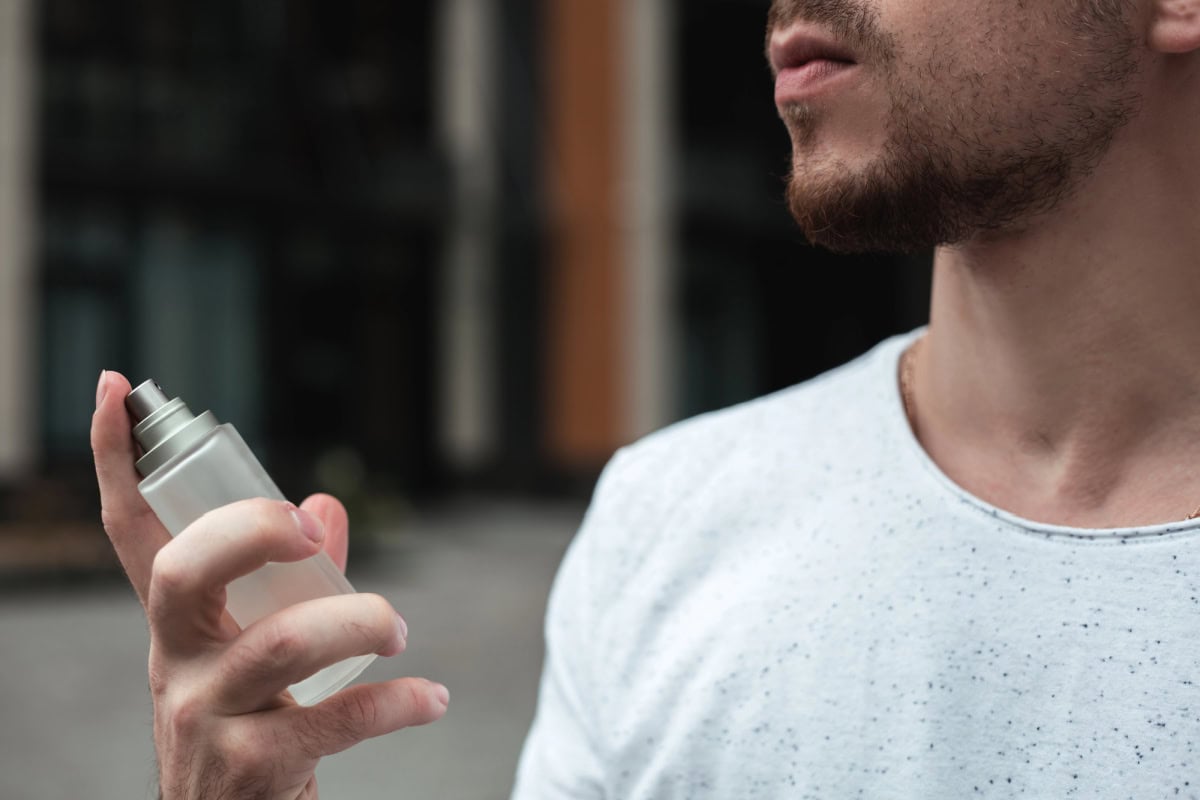
The way in which products are applied is important for avoiding scent conflicts – this involves using deodorant on the underarms and applying perfume to the pulse points – thus allowing both products to function without interfering with each other.
After you have showered and dried your skin, apply a moderate amount of deodorant to the underarm area. Leave the deodorant for a minute to dry, as this will prevent it from staining your clothes. You should use perfume on clean, warm spots such as the neck, ears, wrists or inside of the elbows—these places give off heat because of blood flow and this helps the perfume to disperse into the air while the deodorant remains isolated under the clothes.
Timing Your Application Routine
To avoid the odours becoming too strong, it is necessary to apply both products at the same time, since this causes different chemicals to be released into the air at the same time.
As soon as you have dried off after a shower, apply deodorant and then leave five to ten minutes for the product to be absorbed by the skin while you are styling your hair or getting dressed. If you spray your perfume as your last step before leaving, this gives the deodorant time to stabilise and thus ensures that the first notes of the perfume do not mix with the deodorant vapours.
Selecting Alternative Formulations & Natural Formats
Trying out various types of fragrance dispersers can help reduce any smell interference—for example, liquid roll-ons, mineral salt stones and aluminium-free sprays generally cause less sensation on the skin than wax sticks.
Mineral salt stones leave a thin film of salts on the skin to stop bacteria, thus providing protection without the need for synthetic oils. Lightweight sprays evaporate rapidly and do not leave a residue which could trap perfume molecules. Various formats ensure hygiene while keeping the skin free from thick layers of chemicals.
Managing Fabric Retention & Laundry Care
Clothing fibres frequently lead to problems with fragrance – detergents and fabric softeners tend to leave strong odours on shirts and jackets, and wax from deodorants can accumulate in the seams of the sleeves after a period of time.
When perfume is sprayed near it, fabric functions as a kind of speaker for artificial odours. In order to avoid this, the fabric parts should be washed using unscented or hypoallergenic detergents. It is important not to use excessive amounts of scented fabric softener. Wearing neutral clothes makes sure that the perfume displays its genuine profile.
Adapting Your Routine for Activity Levels & Seasons
The way in which products are combined should be affected by physical activity and by the season, since sweat production rises both when exercising and in hot summer weather, leading to a greater diffusion of underarm products; therefore, it is advisable to use a fragrance-free antiperspirant together with a light perfume on days when you are active.
Sweat production is lower in winter or at formal indoor events since the cold air causes scents to travel a shorter distance, making it possible to use stronger perfumes and moisturizing deodorants. Choosing products that suit the environment helps to keep the fragrance in balance and under control.
Managing Application Volume, Concentration, & Skin Chemistry
The total amount of liquid used is significant for maintaining scent clarity. Specific oil concentrations are also vital to avoid conflict with underarm hygiene products. Manufacturers craft fragrances in different strengths, which range from light Eau de Colognes to dense Eau de Parfums & Extraits de Parfum. Over application of highly concentrated mixtures is risky because body heat causes faint deodorant scents to react poorly. Limiting concentrated liquids to one or two sprays on pulse points ensures the aroma is balanced. For men comparing fragrance strengths and styles, guides to cologne for men can help narrow down suitable options.
Individual skin chemistry, oil production, surface pH levels and body heat determine how products change on the dermis over multiple hours. Warm skin increases the speed at which top notes evaporate. Users with high body temperatures release deodorant and perfume molecules quickly and with high intensity. Analyzing personal heat levels is helpful when selecting grooming items. If a user has a high body temperature, they are encouraged to choose unscented or mild deodorants – this choice prevents the underarms from releasing heavy synthetic scents, which allows the selected perfume to remain clear.

- 5 Cuddly Breeds Like the Cavapoo That Make Family Life Even Sweeter - October 22, 2026
- How to Wear Men’s Perfume Without Clashing With Deodorant - October 22, 2026
- Why Some Homes Feel Magical at Christmas (And Others Just Look Decorated) - October 21, 2026