The most common mistake with an Icelandic camper trip happens months before the plane lands: treating the vehicle as something to sort out once the flights are booked.
The reward for planning it properly is waking up a short walk from Jökulsárlón, with icebergs turning slowly in the lagoon and the car park still empty. A motorhome rental Iceland is a wonderful way to experience mornings like that, with a bed, a kitchen, and the next stretch of coastline all parked in the same spot. Coffee goes on the stove while the water is still quiet, and nobody has to check out of anything.
Getting to that morning without spending money on avoidable problems comes down to a handful of decisions. These are the ones that catch first-timers most often, roughly in the order they come up.
Late summer bookings
June to August is peak motorhome season, and the supply of vehicles doesn’t stretch to meet the demand. Summer availability is limited, so booking three to six months ahead is the sensible window. Leave it later and the choice narrows fast. The larger family-sized vehicles and the automatics tend to go first, and whatever’s left may not suit the group or the budget.
Work backwards. Settle on how many people are sleeping in the vehicle and whether anyone needs a fixed bed rather than one that converts from the dinette. Then lock in the dates, and book flights around the camper rather than the other way round.
A rushed Ring Road
Route 1 looks manageable on a map. It isn’t, not in a long weekend.
Most travelers finish the Ring Road in seven to ten days, and that pace still involves plenty of time behind the wheel. Squeeze it into four or five and the trip becomes a blur of fuel stops and windscreen views, with Dettifoss and the eastern fjords reduced to quick photos through the glass. Weather adds its own delays, and a motorhome is slower and more tiring to drive than a hatchback.
With a short trip, pick a region and go deeper. The south coast out to the glacier lagoon and back, or Snæfellsnes plus the Golden Circle, fills a week comfortably and leaves room for a second night somewhere good.
F-road assumptions
This one costs people the most when it goes wrong.
F-roads are the mountain tracks into the highlands, often unpaved, sometimes with river crossings. Two-wheel-drive campervans and motorhomes cannot legally drive on them at all. Less obvious is that many rental contracts ban F-road use even when the vehicle is a 4×4. Four-wheel drive on the spec sheet doesn’t mean permission to use it. Driving where the contract forbids can leave the renter paying for any damage personally.
Before signing, get clear answers to these:
- Is F-road driving permitted for this specific vehicle?
- Are any named routes excluded even if F-roads are generally allowed?
- What happens to the insurance cover if the vehicle is taken onto a prohibited road?
If the highlands are a priority and the camper can’t go there, a day tour from a nearby town gets the views without the risk.
Overnight parking and waste
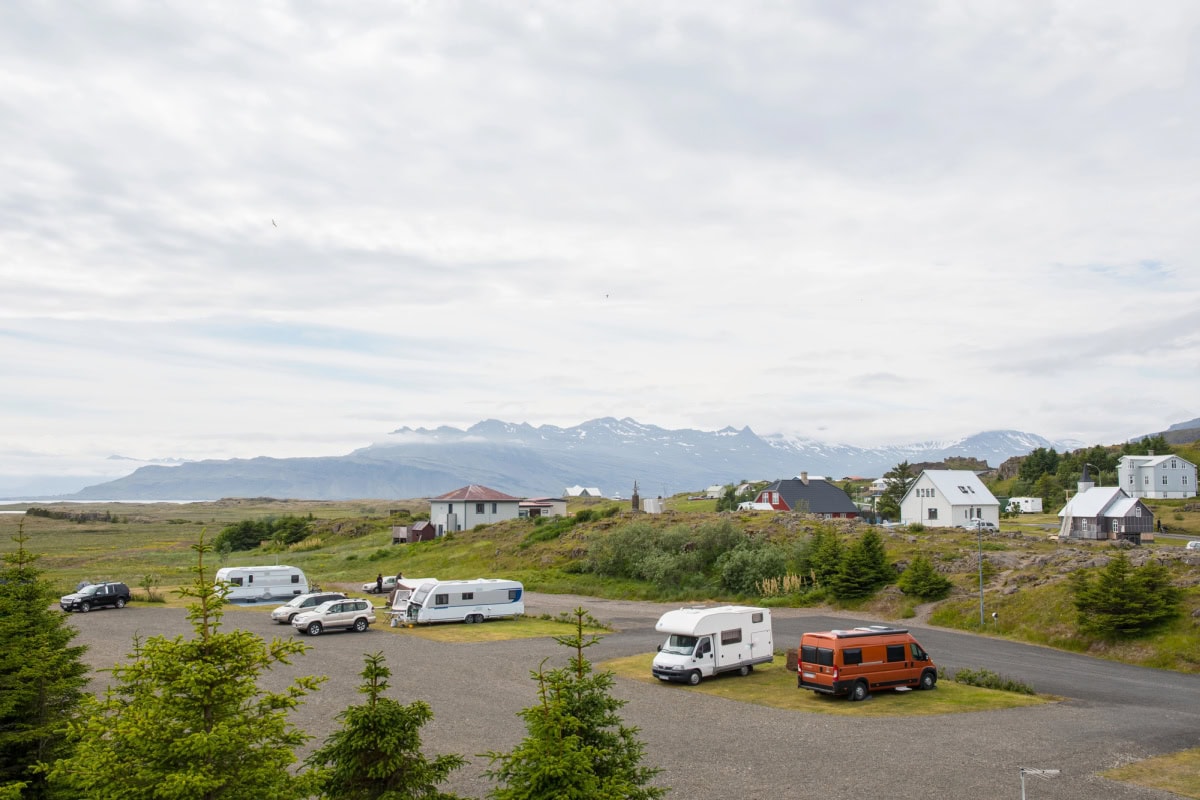
Pulling over at a lay-by with a view feels like the whole point of a camper. In Iceland, it’s not allowed. Since 2015, campervans and motorhomes must spend the night at registered campsites or in urban areas unless the landowner has given permission. Locals do notice, and so does the rental company when a fine arrives.
Waste has its own rules. Emptying grey water or a cassette toilet anywhere outside a designated disposal point is illegal, and that includes a quiet ditch at the edge of a campsite. Campsites with dump stations make this easy, so plan the evening stop with that in mind: check where tonight’s site is, and whether it has a disposal point, before the light goes.
Credit card cover
Plenty of travelers decline the rental company’s extra insurance because their credit card “covers rentals”. For cars, it sometimes does. Many credit card rental insurance policies exclude motorhomes and campers entirely, a detail usually buried in the policy wording and discovered only after a claim is turned down.
Call the card issuer before the trip and ask directly whether a motorhome is covered in Iceland. Get the answer in writing. If it’s a no, or a vague maybe, buy the protection at the counter.
Gravel protection deserves particular attention. Loose stones thrown up by passing traffic chip windscreens and paintwork constantly on unpaved stretches, and it’s recommended for anyone heading to the Westfjords or onto permitted F-road routes. A single cracked windscreen can easily cost more than the add-on.
Driving habits from home
Icelandic roads reward patience. Paved sections can turn to gravel with little warning, and the edges are often soft with no shoulder to speak of, so drop speed early and stay off the verge. Single-lane bridges appear regularly, even on the Ring Road; the vehicle closest to the bridge goes first, and it’s worth slowing well before reaching one.
Sheep wander onto the tarmac. Wind is the bigger surprise in a tall vehicle, especially along the south coast, where gusts can push a motorhome sideways. Grip the wheel with both hands, and open doors carefully, because a gust can wrench one off its hinges.
Then there’s the rule that trips up almost everyone from abroad: headlights must be on at all times, day or night, all year. On collection day, before leaving the lot, find the light switch, set it to stay on with the engine, and walk round to the front to check both lamps are lit.

- Mostyn Law Review: Handling Houston’s Range of Negligence Accident Claims - November 17, 2026
- Dulce de Leche, Alfajores, and Afternoon Tea: A Sweet Tooth’s Guide to Buenos Aires - November 17, 2026
- How to Plan a Stress-Free Thanksgiving and Holiday Season With a November Printable Calendar - November 17, 2026