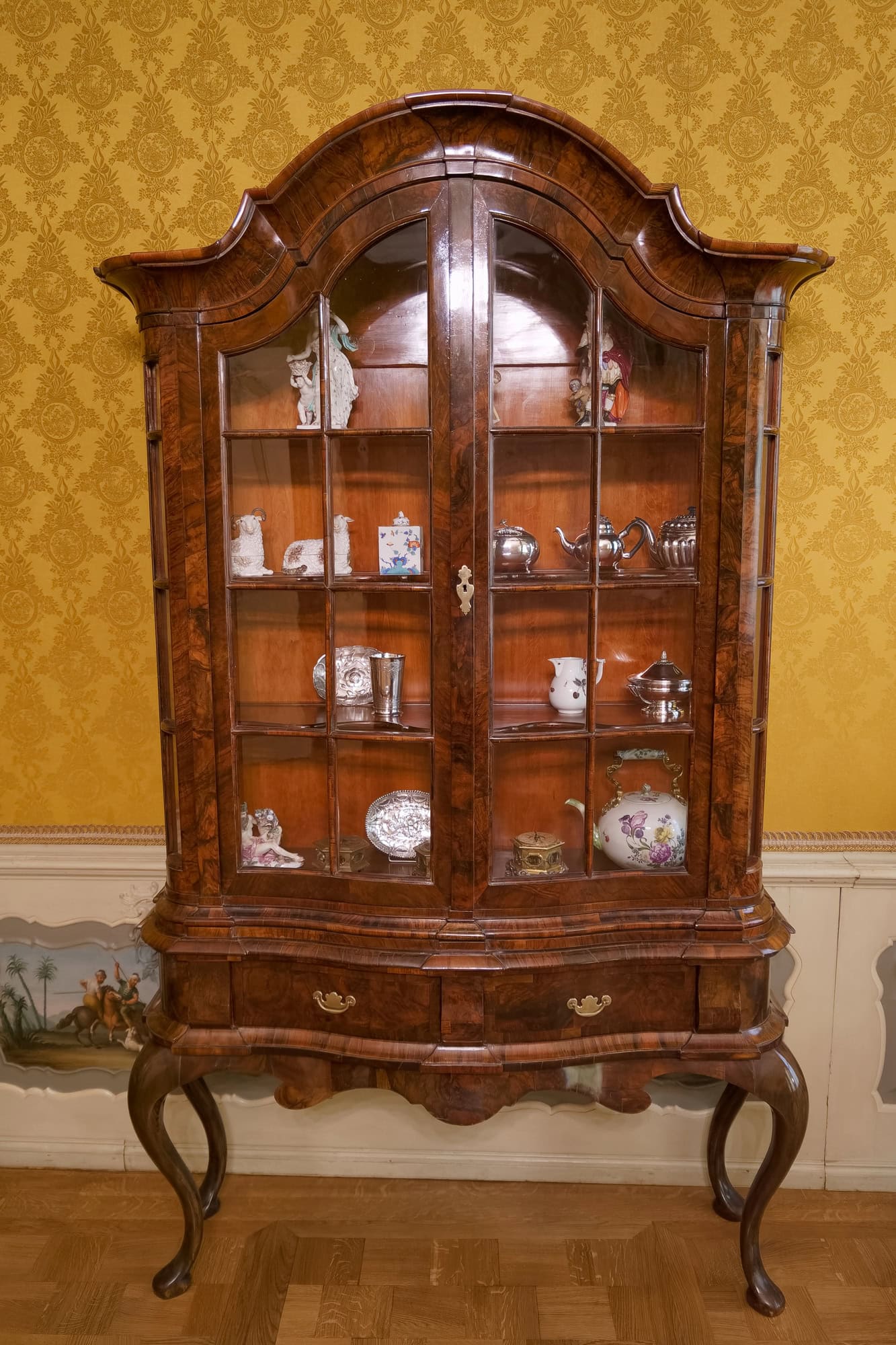
That scarred oak dining table sitting in the garage, or the glass-front china cabinet nobody uses anymore, might be worth a lot more than the dump run everyone keeps threatening. It might also be worth almost nothing. The only way to know for sure is to look past the dings and dust and ask the questions a professional would ask before putting a number on it.
Most homeowners never think about furniture value until a move, a divorce, an inheritance, or a tax season forces the question. By then the piece has usually been cleaned, repainted, or “fixed up” in ways that actually erase the evidence that would have made it valuable in the first place.
Why Age Alone Does Not Make Furniture Valuable
A piece being old does not automatically make it worth money. Furniture more than 100 years old is generally considered antique, while newer pieces fall into vintage, mid-century, or retro categories, but age is only one factor among several.
What actually drives value is a combination of maker or manufacturer, authenticity of the period claimed, materials and construction methods, condition, and current collector demand. A machine-made reproduction dining set from the 1980s styled to look colonial can be worth far less than a plain, well-made Arts and Crafts side table from 1910 with its original finish intact. The reverse is also true: a rare design from a documented maker can be worth serious money even with visible wear, while a common factory piece in perfect condition may still have limited resale value.
What a Professional Appraisal Actually Evaluates
A real appraisal is a documented, reasoned opinion of value, not a number copied from a similar listing online. An appraiser examines identity and attribution (maker, designer, period, and style), the materials and joinery used in construction, the condition and any repairs or replaced hardware, and provenance such as receipts, estate records, or family photographs that support the piece’s history.
This is also where a furniture appraisal differs from a casual estimate: it ties a specific value to a specific purpose, whether that purpose is insurance coverage, an estate inventory, a charitable donation, or a private sale. Telling the appraiser the intended use before the work begins matters, because a report built for insurance replacement cost is not interchangeable with one built for a tax deduction or a probate filing.

Fair Market Value Is Not the Same as Replacement Value
One of the most common points of confusion is assuming furniture has a single, fixed value. In reality, the number changes depending on why it is being valued.
The table below lays out the main value types a homeowner is likely to encounter:
| Value type | What it means | When it applies |
|---|---|---|
| Fair market value | What a willing buyer and willing seller would agree on without pressure | Estate settlement, tax filings, probate |
| Auction value | The likely result in a specific auction setting, after fees and timing | Deciding whether to consign a piece |
| Retail or market value | A realistic price through a dealer or retail channel | Buying or selling through a shop |
| Replacement value | Cost to replace the item with an equivalent piece | Insurance coverage |
| Liquidation value | Amount realized under a constrained, urgent sale | Estate clearance, moving deadlines |
A replacement-value figure used for an insurance policy can be noticeably higher than what the same piece would actually bring at auction. Confusing the two is one of the most common reasons homeowners feel blindsided by either a low sale price or a denied insurance claim.
How to Prepare a Piece Before Calling an Appraiser
What happens in the days before an appraisal, not during it, often determines how much useful evidence survives. A few simple steps protect the information an appraiser actually needs.
- Photograph the entire piece from several angles, including the back and underside.
- Photograph any labels, stamps, maker’s marks, or signatures exactly as found.
- Measure height, width, and depth, and note any extensions, leaves, or removable shelves.
- Record visible damage, stains, repairs, or hardware that looks newer than the rest of the piece.
- Gather any receipts, prior appraisals, or family history tied to the item.
- Avoid cleaning aggressively, stripping finish, repainting, or swapping out hardware before the inspection.
- Keep all original parts together, even loose ones, and note if anything has already been replaced.
- Decide and state the purpose of the appraisal: sale, insurance, donation, or estate division.
Skipping step six is the single most common mistake. A well-meaning coat of refinishing varnish or a scrub with the wrong cleaner can remove exactly the surface evidence an appraiser needs to confirm age and originality, sometimes cutting the value in half.
What It Costs to Get Furniture Appraised
Pricing varies widely depending on the type of report needed. Informal online opinions based on photographs are often advertised in the range of 10 to 50 dollars per item, while a verbal consultation with an in-person appraiser commonly runs 50 to 150 dollars per hour. A written report suitable for insurance purposes is typically quoted around 200 to 400 dollars per item, and formal reports needed for tax or legal purposes can run 300 to 600 dollars or more per item depending on complexity.
Before paying, it is worth asking whether the fee is hourly, per item, or a flat project rate, whether the written report is included, and whether comparable sales are documented in that report. An appraiser who charges a percentage of the item’s value, rather than a flat or hourly fee, creates a conflict of interest that can undermine the independence a tax or insurance assignment requires.
Donating an Old Dining Set or Cabinet: What the IRS Expects
Furniture given to charity is treated by the IRS as a household item, and used household items generally need to be in good used condition or better to support a deduction. If a piece is not in good condition, a deduction is still possible when the claimed value exceeds 500 dollars and the donor obtains a qualified appraisal to support it.
For any non-cash donation over 500 dollars, the donor generally needs to file Form 8283 with their tax return. The valuation used in that appraisal cannot be dated earlier than 60 days before the donation or later than the donation date itself. The IRS also notes directly that used furniture’s fair market value is typically well below its original purchase price, and that applying a flat percentage to the original cost is not an acceptable way to estimate that value. A charity’s donation receipt confirms what was given, but it does not establish the dollar value the IRS will accept.
Red Flags That Signal a Problem
A few patterns tend to show up whenever furniture value gets mishandled. Treating an online asking price as proof of value is one, since listings reflect hope more than actual sales. Assuming a family story about where a piece came from counts as documented provenance is another, since appraisers rely on receipts, labels, and records rather than memory alone.
It is also a mistake to assume a full dining set, including the table, chairs, leaves, and matching cabinet, should be valued as separate interchangeable items rather than as a set, since sets are frequently worth more together than the sum of their individual pieces. Finally, an appraiser who offers to buy the piece they are valuing has a conflict of interest that should be disclosed and addressed before the report is trusted for insurance, tax, or estate purposes.

- Is Your Antique Dining Table or China Cabinet Worth More Than You Think? - October 16, 2026
- Easy Low-Carb Food Swaps for Everyday Family Meals - October 16, 2026
- Keep the Family Scrapbook, Make a Separate Photo for Sharing - October 16, 2026