A family bike ride can start with plenty of enthusiasm, only for “I’m tired” or “I want to go home” to surface halfway through. That doesn’t necessarily mean children dislike being on a bike, or aren’t ready to ride a little further.
Longer bike rides go far better when you plan around what actually interests children, break it into manageable stages, and pace it to match their energy rather than an adult’s. Cycling like this, at a relaxed family pace, should stay enjoyable for everyone — not just the strongest rider in the group. Timely breaks, plus a willingness to change the plan, keep ordinary tiredness from turning into a full-blown protest.
The tips below are for parents whose kids already ride independently and are starting to take on longer family bike outings.
Key takeaways:
- Most “I’m tired” moments have a specific cause, whether that’s hunger, thirst, discomfort or boredom, and each one calls for a different response.
- A ride built around somewhere kids actually want to reach, with small checkpoints along the way, holds their attention far better than one measured in miles.
- Giving children small choices and responsibilities makes them feel like participants, not passengers.
- Shortening or changing a ride isn’t a failure — ending on a good note is what makes the next ride happen.
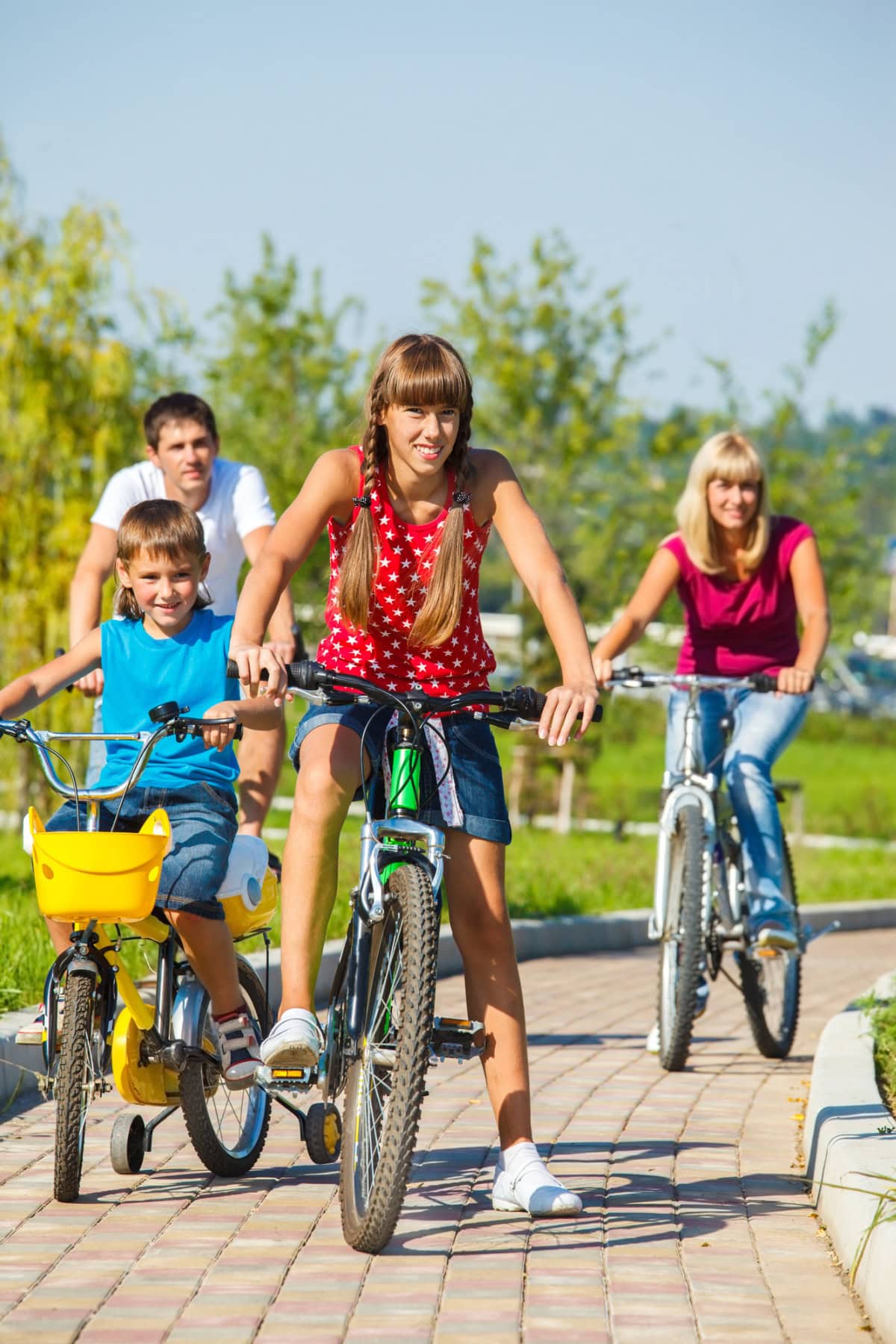
Why Young Riders Lose Motivation on Longer Family Bike Rides
When children say they’re tired, the problem isn’t always how far they’ve gone. They may be hungry, thirsty, uncomfortable, bored, or simply worried about how much further there is to go.
Trying to fix every complaint with encouragement or a treat can miss the real issue. A short chat is usually a better starting point than a quick fix, and parents often find this takes less time than it sounds.
Tired, Hungry, Uncomfortable or Bored?
Watch for changes in behavior rather than taking “I’m tired” at face value. Has the child stopped chatting? Are they repeatedly asking how much further it is? Has their pace suddenly dropped, or are they complaining about their hands, legs or how the bike feels underneath them?
These small signs help you tell the difference between a child who needs food or rest and one who needs a more interesting next goal.
Listen Before Trying to Motivate
Ask something specific: “Do you need a break, or does something feel uncomfortable?” That’s much easier for a child to answer than a general “What’s wrong?”
Listen before deciding what happens next. Motivation is much easier to restore once you’ve sorted out the real cause of frustration.
Plan a Family Bike Ride Around Somewhere Kids Want to Go
Adults might cycle for the exercise or the scenery, but children are far more likely to care about the destination — what’s waiting at the end. Choosing somewhere they’ll enjoy gives a bike ride purpose beyond simply pedalling.
Choose a Place Worth Riding To
A playground, a park, a picnic spot, a lake or a favorite café can all give kids a clear reason to keep going. Even a familiar place can seem more exciting when you get there on two wheels, and riding somewhere new together along a favourite trail or path is also a nice way to enjoy cycling as a family, not just get from A to B.
Where possible, choose quieter roads, traffic-free cycle paths or familiar trails in the park with manageable surfaces and crossings — parks and dedicated paths are generally a safer, more forgiving choice for younger or less experienced riders. This keeps the focus on enjoying the ride rather than traffic, and lets you shorten things if the weather turns or energy dips earlier than expected.
Let Your Child Help With the Planning
Offer two suitable places or stopping points and let the child choose. Show them the general route beforehand, and point out landmarks you’ll pass along the way, such as a bridge or a shop they know.
Kids can also choose a snack, suggest a game, or pick the main rest stop—small decisions that build involvement without handing over safety decisions entirely.
Set a Child-Friendly Pace and Use Small Checkpoints
Children vary hugely in how far they can comfortably ride, so it’s worth treating any distance as a loose starting point rather than a target. A child who’s been riding confidently for a while will probably shrug off a route that would overwhelm one who’s only just started tackling longer outings — the same principles apply either way; they just need recalibrating as confidence grows.
Before setting off, agree on a simple signal to slow down or stop, and make sure everyone, adults included, sticks to the pace of the youngest rider, riding alongside rather than pushing ahead. Children pick up on an adult’s stress far faster than they pick up on distance, so staying relaxed matters more than any number on a map.
Use Landmarks Instead of Miles
“Three miles to go” can feel abstract and discouraging. A visible checkpoint is much easier to grasp: the next bridge, the big tree, the café, or the turn near the park.
Focusing on one manageable section at a time makes the whole ride more achievable, and checkpoints give you a natural moment to check in without constantly asking about tiredness.
Build Distance Gradually
Start with a distance the child can finish without becoming completely worn out, then add a little more on a future outing if that one goes well.
Easy talking while pedaling can be one useful sign that the pace is manageable — if a child goes quiet or starts breathing heavily, it’s worth slowing down. It isn’t the only thing to watch, though: posture and willingness to keep going matter just as much. Avoid comparing a child’s pace or ability with an adult’s.
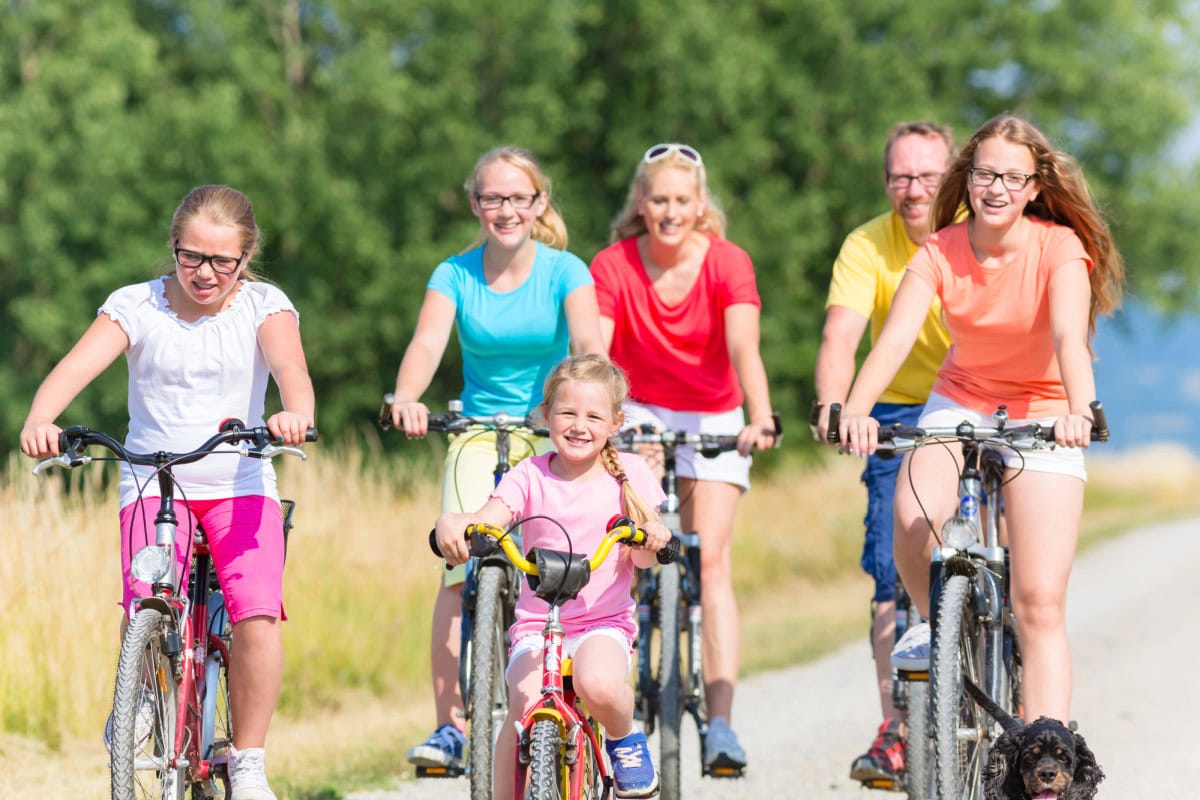
Building a Few Extra Skills for Longer Rides
Riding around the block and covering real distance ask slightly different things of a young cyclist, even once balance and pedalling feel completely natural. A handful of extra skills close that gap, and none of them need a formal lesson — a few minutes practising in a quiet park before setting off is usually enough.
Shifting gears smoothly before a hill, rather than after starting to struggle up it, keeps momentum and confidence intact. Checking that the brakes bite evenly, front and back, matters more on a descent than on the flat. Glancing back before pulling out to pass someone or before a turn is a habit worth building early — most children pick it up in a couple of tries with a parent calling it out from behind. And holding a reasonably steady line, rather than weaving to look at things, keeps a shared path predictable for everyone else using it.
None of this needs to feel like a test. Confidence with these small skills often matters more than raw fitness once rides get longer, and it’s often what separates a child who’s excited by an extra mile from one who finds it a struggle.
Give Kids Ownership and Make the Ride Feel Like an Adventure
Children don’t need to control the whole ride to be part of it. Meaningful choices, small responsibilities and simple activities can turn an ordinary outing on two wheels into a shared cycling adventure that builds independence and confidence, one small decision at a time.
Give Young Riders Meaningful Choices
On a suitable traffic-free stretch, let the child lead for a while. They could also choose the next stopping point from two safe options, or take on a small job like watching for the next checkpoint.
This gives them a bit of independence while the adult stays responsible for the ride overall.
Use Simple Games and Conversation
Simple games and small challenges can make a quiet stretch more fun and keep a longer bicycle ride enjoyable rather than hard work — try spotting a particular color, counting bridges or bicycles, or looking out for birds and animals. Challenges like these work best kept light and occasional, not constant.
Talking works just as well. Ask the child to invent a story about a spot along the way, or decide together what the family should do once they arrive.
Keep games light enough that the child can still concentrate on riding and notice how other cyclists, pedestrians, and path users share the same space, particularly near traffic.
Praise Effort Rather Than Speed
Specific encouragement lands better than a repeated “well done.” Notice steady pedalling, controlled braking, getting up a hill, or carrying on calmly after a break — something like “you kept pedalling even when that headwind started” tells a child exactly what you noticed. Praise like this probably does more for lasting confidence than getting through any one difficult afternoon — easy to forget, in the moment, when everyone just wants to reach the café before it shuts.
Avoid comparisons with siblings, friends or adults, and don’t criticize a child for falling behind. The aim is confidence and enjoyment, not turning family cycling into another competition.
Use Breaks, Snacks and Water Before Energy Drops
A break works best when it comes before a child gets extremely hungry, thirsty or frustrated. Waiting for a complaint makes it harder for them to bounce back.
Planning Breaks Before They’re Urgently Needed
Pick a few comfortable places to stop while you’re getting ready — shade, somewhere to sit, and access to toilets are all useful once a ride runs long. A break doesn’t need to mean sitting still for long; kids often prefer to get off, walk around a bit, or look about before getting back on the bike. Children often signal hunger or thirst well before they say anything, so watching for it saves a lot of fuss later.
No fixed schedule suits every ride. Let the weather, the route you’re covering and the child’s mood guide when you pause.
Bring Familiar Food and Flexible Clothing
Pack water, familiar snacks and an extra layer of clothing. A longer ride isn’t the moment to try food a child might refuse.
Offer water regularly, especially in warm weather or once a child starts sweating more than usual — waiting for them to ask can already be a little late. Consider wind and changing temperature too: a child who’s too cold, too hot, or just generally fed up with their clothes can lose interest quickly, even with plenty of energy left in their legs. Treats can be part of the day, but shouldn’t be the only reason a child is expected to carry on.
Make Sure the Bike Supports the Ride
Small discomforts become far more noticeable the longer a ride goes on, so a two-minute check before setting off is worth the habit:
- Tyres holding pressure, with no obvious wear
- Brakes biting evenly, front and back
- Chain running smoothly, nothing loose or rattling
- Saddle height and grips comfortable — not digging into small hands
- Helmet level on the head, straps snug and flat
A child should be able to get the pedals turning, steer where they mean to go, and stop without a fight. Ask about numb hands, aching legs or an awkward riding position rather than assuming every complaint comes down to tiredness — a saddle set too high or grips that dig in can be enough to spoil a good ride on their own.
Comfort matters more the further a child rides, so an independently riding child needs a bike they can pedal, steer and stop with confidence — whether that’s their current model or a lightweight 20-inch bike.
Light-coloured or fluorescent clothing helps other road and path users spot young cyclists in daylight, and reflective details are worth having for any ride that runs later than planned. Riding within sight of a responsible adult remains the simplest safety habit of all, whatever a child’s age.
Know When to Pause, Shorten Things or Turn Back
Changing the plan doesn’t make a ride unsuccessful. Pushing on until a child is distressed or completely worn out only makes them less keen on the next one.
Check the Most Likely Cause
When children want to stop, start by checking the obvious things — are they thirsty, hungry, or just after a rest — then whether the weather has turned, the route’s got too hard, or something simply feels uncomfortable. Sometimes they just need a quieter stretch, a different next goal, or a few minutes off the bike.
Adjust the Plan Without Creating a Sense of Failure
Pause before deciding what to do. A snack, a slower pace or a longer break may be all that’s needed; if not, cut things short or swap out a hard stretch where you can.
Turning back can be exactly the right call. “We’ll save that last bit for next time” frames it as an adjustment to the day, not something the child failed at.
End With a Positive Memory
Point out one specific thing children did well before a ride ends — finishing a hill, going further than last time, or making the sensible choice to ask for a break. Afterward, ask what they enjoyed and what they’d change. Their answer is genuinely useful when parents are planning the next family bike trip.
Frequently Asked Questions About Longer Family Bike Rides
How do you keep kids motivated on longer family bike rides? Pick somewhere children actually care about reaching, break the route into visible checkpoints, and let them make a few meaningful choices along the way. Match the pace to the youngest rider, and respond to hunger, discomfort or tiredness before it turns into frustration.
How far should a child ride on a family bike ride? There’s no single suitable distance for every child — it depends on experience, terrain, weather, and how children are feeling that day. Start with a distance they can finish comfortably and build up gradually rather than aiming for a fixed target.
What should you bring on a longer family bike ride with kids? Water, familiar snacks and a spare clothing layer are the basics. It’s also worth carrying a small bicycle repair kit: a pump, a spare inner tube and a multi-tool. A puncture halfway down a trail is no fun without one. A few plasters or wipes for minor scrapes are handy too.
What should you do when a child gets tired or wants to stop during a bike ride? Pause and work out the likely cause. Offer water, food or rest, and check for discomfort. Slow down, cut the route short, or turn back if continuing would feel stressful rather than fun.
Make Longer Family Bike Rides Something Kids Want to Repeat
Successful family cycling isn’t measured only in miles. An appealing destination, a manageable pace, small choices and well-timed breaks all help young riders stay engaged for longer — and, in line with NHS guidance for children and young people, every ride like this counts towards a healthy weekly total, not something that needs to happen in one go.
Kids tend to remember how a ride ended far more than how long it actually was — most parents could probably vouch for that. Forget the odometer. What counts is a good memory at the finish, and a child who’s genuinely keen to get back on the bike next time.

- Family Cycling with Kids: How to Keep Young Riders Motivated on Longer Rides - October 15, 2026
- When a Marriage Ends but the Mortgage Doesn’t Get the Memo - October 15, 2026
- Non-Alcoholic Champagne vs Sparkling Cider: How to Choose Your Bubbles - October 15, 2026