You have done the Palace. You have stood in the peristyle, gone down into the cellars, photographed the bell tower and been gently funneled past nine shops selling the same fridge magnets. It was worth it. But by mid-afternoon on day one, a reasonable question arrives: is that it?
It is not, and the better parts of Split are mostly free. The city has a life that carries on entirely independently of the Roman walls, and finding it takes no special knowledge. It just takes walking about two hundred meters in the right direction.
Split-Dalmatia County recorded 3.8 million arrivals and 18.3 million tourist nights in 2024, according to the Croatian Bureau of Statistics. Almost none of those visitors leave the old town. That is the opportunity.
Start Where the City Actually Shops
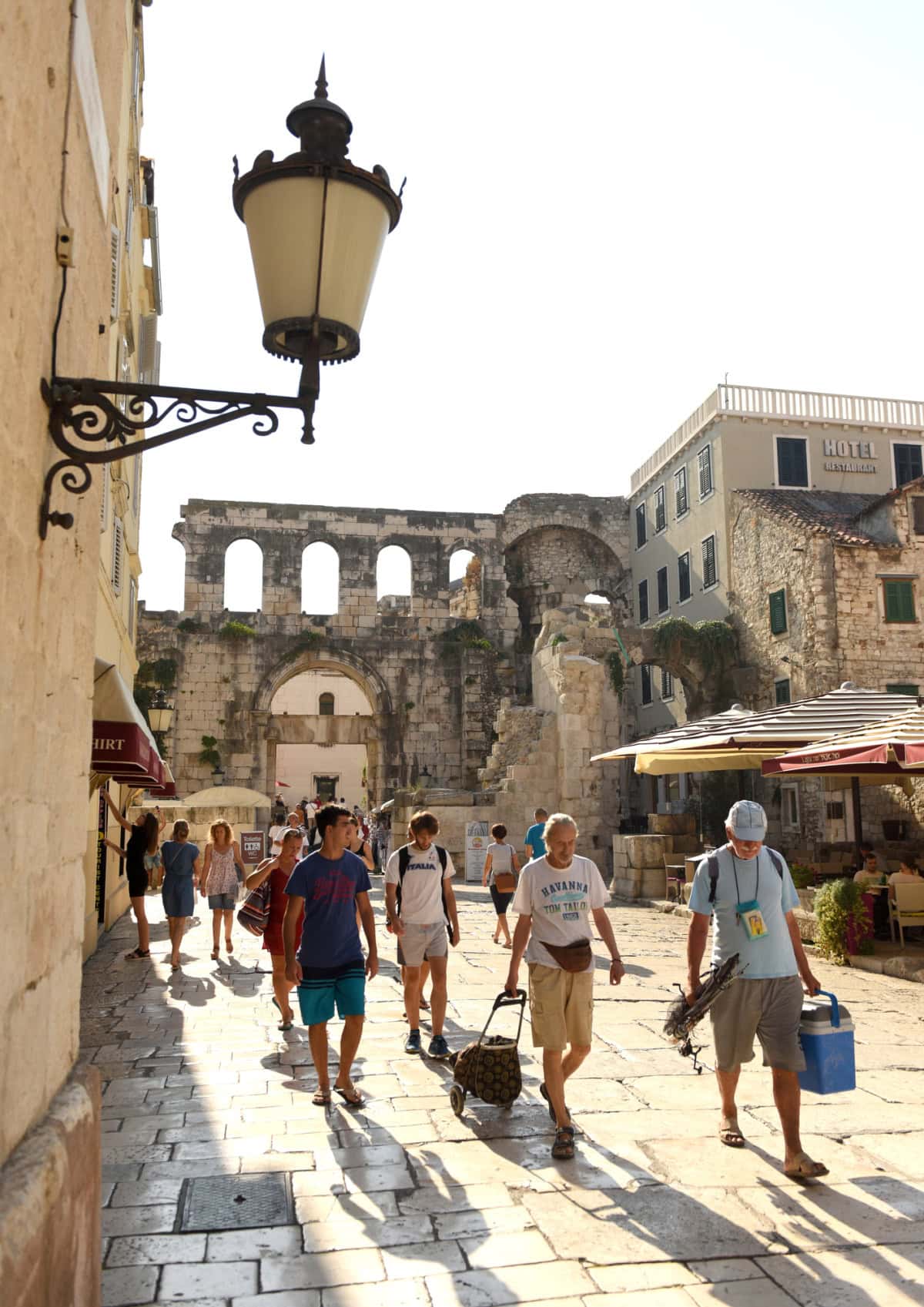
Two markets sit either side of the Palace, and they are the fastest route into ordinary Split. The Pazar, the green market on the eastern wall, is loud, cluttered, and entirely functional. Fruit, vegetables, cheese, honey, olive oil, dried figs, and stallholders who have no particular interest in charming you. On the western side, the Peškarija fish market is a covered hall of marble slabs and morning catch, notable locally for the fact that it has no flies, thanks to sulphur springs nearby.
Go early. By eleven the best of it has gone, and the traders are packing up. Take cash, take a bag, and buy something for later even if you have nowhere to cook it. A bag of cherries and a wedge of cheese makes a better lunch than most restaurants on the Riva.
Marjan, Which Locals Treat as a Backyard
Rising directly behind the old town is a wooded hill that functions as Split's lungs. Marjan is a proper forest park, all Aleppo pine and limestone, laced with paths and dotted with tiny medieval chapels.
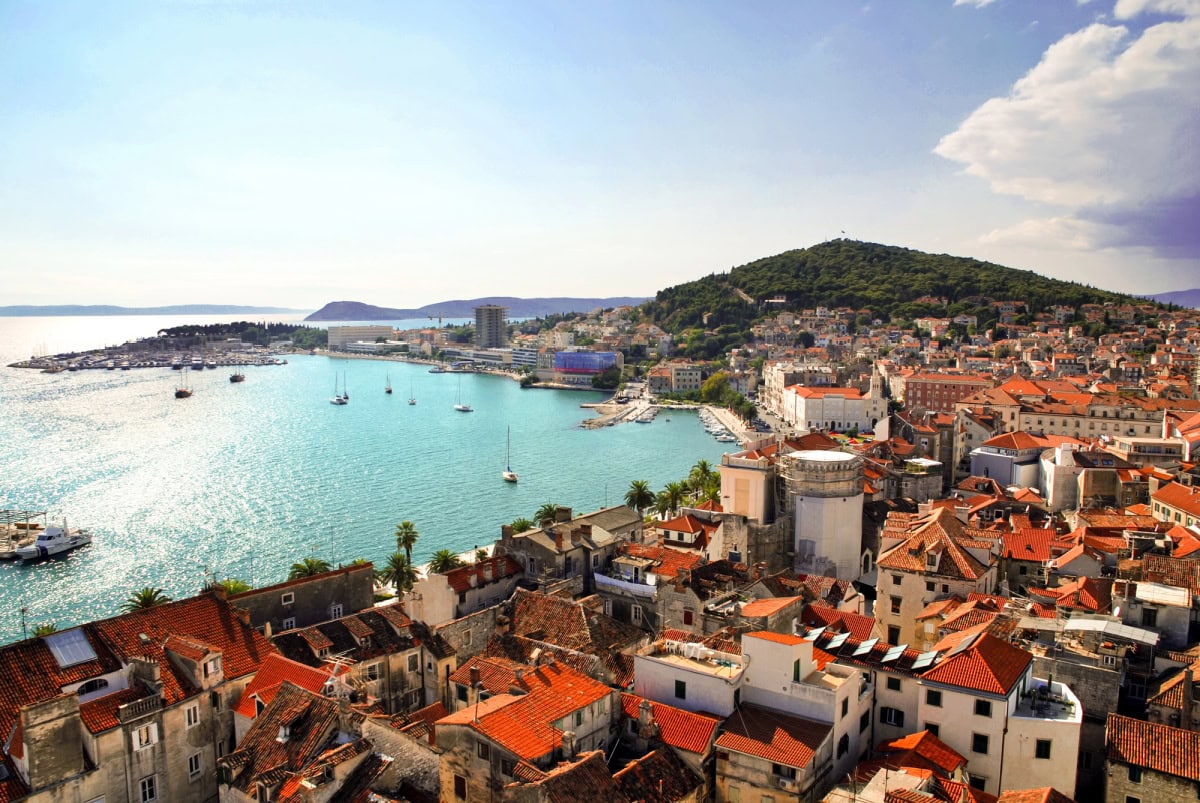
Climb the steps from Varoš and within fifteen minutes the city noise drops away entirely. There are viewpoints along the ridge looking back over the terracotta roofs to the islands, and the path keeps going for as long as you want it to.
On any given evening you will find far more locals than visitors up there. Runners, dog walkers, families, teenagers. It is not a landmark so much as a habit, which is precisely why it is worth an hour or two of yours.
Coffee Is Not a Drink Here
This is the cultural detail most visitors miss entirely. In Split, coffee is a social institution with its own unwritten timetable, and rushing it marks you out immediately.
Two neighborhoods reward wandering:
- Varoš, the old fishermen's quarter just west of the Palace, with steep stone lanes, washing lines and small cafes that fill with regulars
- Radunica, on the eastern side, an older working street with a slower feel and almost no tourist traffic
Order a coffee, sit down, and stay put. An hour is normal. Two is not unusual on a Saturday. Nobody will hurry you, and nobody will bring the bill until you ask.
Beyond the City
Once you have seen the Palace and a third day opens up, some of the best stops lie beyond the city. Klis Fortress is twenty minutes away, Trogir half an hour, and Omiš with its canyon not much further. These stops chain together neatly into one loose loop, which is why some visitors book a driver for the day from Split rather than commit to a single organized tour.
The loop works well in either direction, though starting early matters in July and August. Klis in particular is far better before the middle of the day, both for the light and for the temperature on the exposed walls.
The Water, and What Locals Do With It
Split is a coastal city that most visitors somehow experience only as an old town. That is a mistake worth correcting on day two.
Bačvice, a short walk east of the harbor, is a rarity on this coast: a shallow, sandy bay. It is also the home of picigin, a local game played in ankle-deep water with a small ball and a great deal of unnecessary diving. Watching it is free and reliably entertaining.
For the evening, walk west to Matejuška, the small working fishermen's harbor just past the Riva. Locals gather on the stone breakwater with a drink at sunset. There is no venue, no entry, no queue. It is simply where people go.
Putting a Second Day Together
The pieces fit into a sensible shape without much planning.
- Market first thing, while it is busy and cool
- Coffee somewhere in Varoš, unhurried
- Marjan in the late morning or, better, the late afternoon
- Bačvice or a swim off the Marjan beaches in the heat of the day
- Matejuška for sunset, then dinner away from the Riva
The one rule worth following is to avoid the old town between roughly eleven and four, particularly when cruise ships are docked. Everything above is more pleasant at the edges of the day anyway.
Conclusion
Diocletian's Palace is genuinely extraordinary, and nobody should skip it. The problem is that it absorbs almost all the attention Split receives, which leaves the rest of a very good city curiously quiet.
Give day one to the Romans. Give day two to the markets, the hill and the coffee. That second day is usually the one people remember.

- Split After the Palace: Markets, Marjan, Neighborhood Cafés and a Better Second Day - July 28, 2026
- Turning a House Into a Home: Small Changes That Make a Big Difference - July 27, 2026
- How to Support a Child After an Autism Diagnosis - July 27, 2026