Getting children outside is one of the simplest ways to support their curiosity, confidence, and physical health. The right activity does not have to be expensive or complicated; it just needs to invite movement, observation, and a little discovery. Whether you are planning a weekend at home, searching for outdoor activities for kids near me, or building a routine after school, there are plenty of practical ways to turn fresh air into meaningful learning.
What makes an outdoor activity both fun and educational?
A strong outdoor learning activity gives kids something to do, notice, ask, and try again. It combines play with a clear opportunity to practice a skill, such as problem-solving, counting, teamwork, creativity, or observation. The best outdoor activities for kids feel like play first, while learning happens naturally through movement and hands-on exploration.
That matters because children often remember what they experience more deeply than what they are simply told. A child who measures a shadow, builds a stick shelter, or follows a trail of animal tracks is using science, math, language, and critical thinking without sitting at a desk. The goal is not to turn every outing into a formal lesson, but to create moments where questions and discovery are easy to follow.
Backyard and neighborhood ideas that spark curiosity
You do not need a national park to plan fun outdoor activities for kids. A backyard, sidewalk, shared courtyard, or nearby green space can offer plenty of room for learning. Start with simple prompts, then let children shape the activity with their own observations.
Try these easy options:
- Nature color hunt: Give children a list of colors and ask them to find leaves, rocks, flowers, or other natural objects that match. This builds attention to detail and vocabulary.
- Cloud storytelling: Have kids watch the clouds, describe shapes, and build short stories around what they see. This supports imagination and expressive language.
- Sidewalk math: Use chalk to draw number lines, shapes, hopscotch patterns, or simple equations. Kids can jump, count, estimate, and solve while moving.
- Mini obstacle course: Use cones, sticks, hula hoops, or chalk lines to create stations for balancing, hopping, crawling, and throwing. Add timing or teamwork for an extra challenge.
- Sound map: Sit quietly for two minutes and ask kids to point toward every sound they hear. Then draw a simple map showing birds, cars, wind, footsteps, or voices.
These activities work well because they are flexible. Younger children can focus on naming and sorting, while older children can compare, measure, record, or explain patterns.
Nature walks become better with a purpose
A walk becomes more engaging when kids have a mission. Instead of saying, “Let’s go for a walk,” try giving the outing a theme. You might look for signs of the season, compare tree bark textures, count pollinators, or notice how many different shapes appear in leaves and stones.
A simple nature journal can make this even more valuable. Children can sketch what they find, write one sentence about it, tape in a fallen leaf where allowed, or make a tally chart. The journal does not need to be neat. Its purpose is to help kids slow down, observe, and connect details over time.
If you visit the same route weekly, ask questions that encourage comparison:
- What changed since last time?
- What stayed the same?
- What do you think caused the change?
- What should we look for next time?
These questions introduce early scientific thinking. Children learn that nature is not random background scenery; it is a living system they can study.
How can kids learn science outside without a formal lesson?
Kids can learn science outside by experimenting with everyday materials and observing real-world results. They can test which objects float, which surfaces create the fastest toy-car ramp, how water moves through soil, or what happens to ice in sun versus shade. The learning comes from predicting, testing, noticing, and explaining what happened.
Keep the setup simple. Fill a bowl or bucket with water and gather leaves, sticks, stones, corks, and toy items for a sink-or-float test. Build ramps from cardboard or boards and compare how far different objects roll. Make a small rain gauge from a clear container and mark water levels after a storm.
Encourage children to say their prediction before they test. Then ask, “What did you notice?” rather than jumping straight to the correct answer. That small shift helps kids develop confidence in observation and reasoning.
Outdoor games that build social skills
Many outdoor activities for kids support more than physical movement. Group games help children practice communication, patience, leadership, and fair play. These skills are especially useful because they are learned through real interactions, not just reminders from adults.
Good choices include:
- Scavenger hunts: Children can work in pairs, divide tasks, and celebrate shared discoveries.
- Capture the flag or team tag: Kids practice strategy, cooperation, and respectful competition.
- Garden helper challenges: Give children roles such as watering, weeding, carrying tools, or checking plant growth.
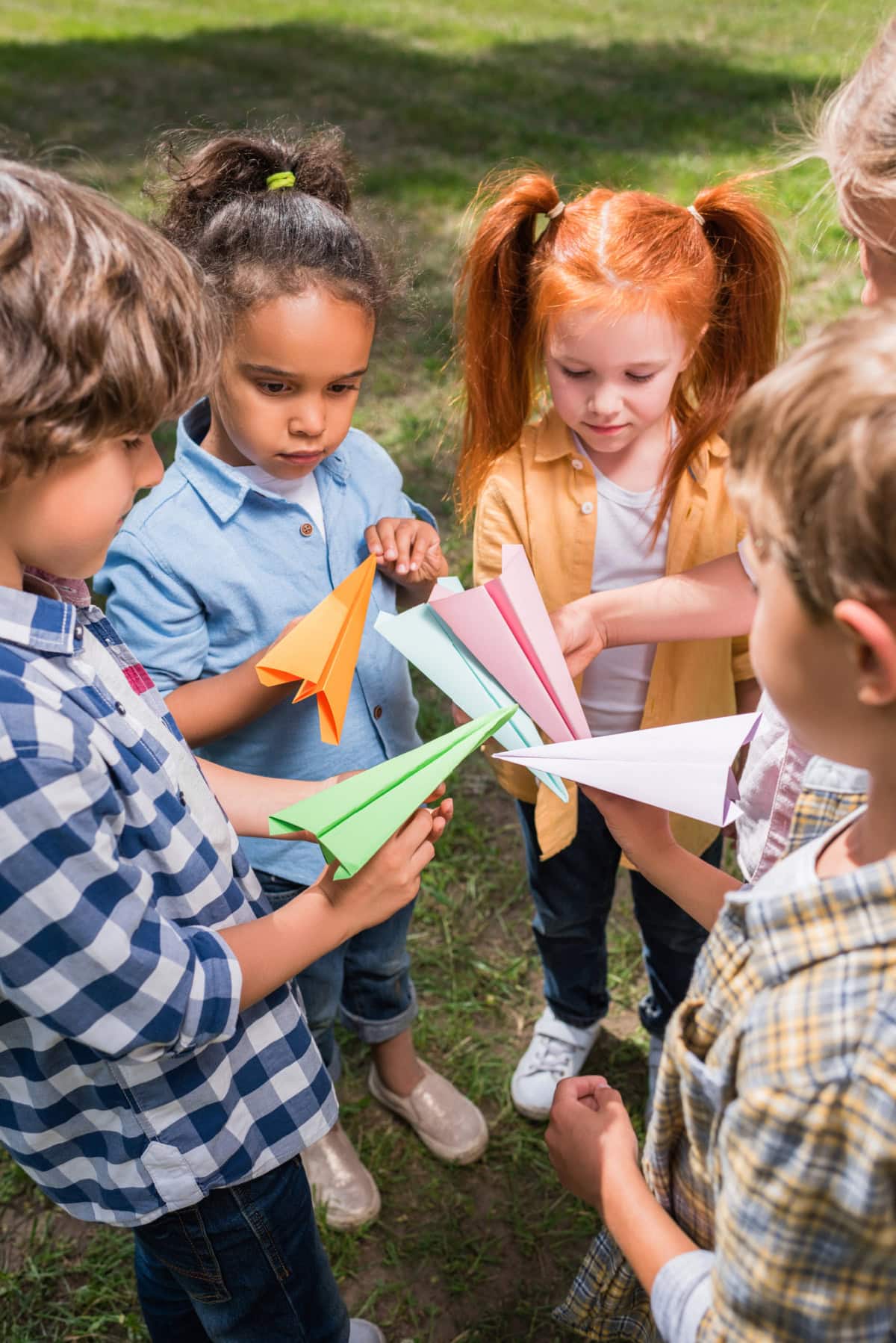
- Build-together projects: Ask kids to create a fairy house, bug hotel, stick maze, or pretend campsite using natural materials.
When disagreements happen, treat them as part of the learning. Ask children to explain the problem, suggest a rule, or vote on a fair solution. Outdoor play is a safe place to practice the social flexibility they need in school, sports, and friendships.
Dress for comfort, safety, and movement
The right clothing helps children stay focused on the activity instead of the weather, scratchy fabrics, or sore feet. Choose layers that can handle temperature changes, and pick clothes that can get dirty. Outdoor learning often includes mud, grass, sand, puddles, and paint-like streaks from chalk or leaves.
Footwear matters because kids will run, climb, crouch, and balance. Sneakers with good traction are often best for parks, playgrounds, and neighborhood exploring; options like youth Jordan shoes can work well when they fit securely and match the planned level of activity. For wet areas, use rain boots or water-friendly shoes, and for hiking, choose sturdy footwear with enough support.
A basic outdoor kit can also help:
- Refillable water bottle
- Sunscreen and hat when needed
- Lightweight jacket or extra layer
- Small notebook and pencil
- Hand wipes or sanitizer
- Bag for collecting allowed items or carrying supplies
Comfort does not mean overpacking. It means reducing the little problems that can end an outing early.
Finding fresh ideas close to home
If you feel stuck, look at what already exists nearby. Parks, libraries, community centers, farms, nature preserves, schoolyards, and recreation departments often offer inspiration even when you are not joining a formal program. A quick search for outdoor activities for kids near me can reveal trails, playgrounds, seasonal events, garden programs, sports clinics, or family-friendly nature spaces.
You can also rotate themes to keep familiar places interesting. One week can focus on insects, the next on shadows, then weather, textures, maps, or teamwork games. Reusing the same location with a new purpose saves planning time while keeping kids engaged.
A simple weekly outdoor learning rhythm
Consistency helps outdoor time become part of family life rather than a special project. A balanced week might include one active game, one nature observation, one creative build, and one free-play session. This gives children structure without making every moment adult-directed.
Here is an easy rhythm to adapt:
- Monday: Chalk games or backyard movement challenge.
- Wednesday: Short nature walk with one observation question.
- Friday: Build something from sticks, stones, leaves, or recycled materials.
- Weekend: Visit a park, trail, garden, or open field for longer exploration.
The point is not to follow a perfect schedule. It is to create more chances for children to move, notice, wonder, and connect with the world around them.
The takeaway
Activities for Kids that Get Them Outdoors and Learning are most successful when they feel playful, flexible, and easy to repeat. Start with what you have nearby, add a simple question or challenge, and let children explore at their own pace. With a little planning, everyday outdoor time can become a powerful mix of movement, discovery, creativity, and confidence.

- Family Cycling with Kids: How to Keep Young Riders Motivated on Longer Rides - October 15, 2026
- When a Marriage Ends but the Mortgage Doesn’t Get the Memo - October 15, 2026
- Non-Alcoholic Champagne vs Sparkling Cider: How to Choose Your Bubbles - October 15, 2026