It’s almost five o’clock, someone needs a ride to practice, and the chicken you meant to cook is still in the freezer. Then comes the question: “What’s for dinner?”
The easiest way to plan family meals is to make fewer decisions at the busiest time of day. Check the week’s schedule, choose a short list of familiar dinners, and turn those meals into one grocery list. The plan does not need to be perfect; it only needs to make tonight’s decision easier.
Here is a practical way to build a weekly family menu around the life you are already living.

Let Your Family Calendar Decide What’s for Dinner
Plan the simplest dinners for your busiest evenings and save meals that take more attention for quieter nights. Before browsing recipes, look at practices, appointments, late meetings, school events, and pickup times. Then ask when someone will actually be home to cook.
A free evening might be a good time to try a casserole or make a meal that creates useful leftovers. A night with two pickups calls for something familiar that can be assembled quickly, reheated, or prepared earlier in the day.
Make each menu entry specific enough to guide the family. “Chicken wraps after soccer; Alex assembles dinner” is more useful than writing only “chicken.” If someone else is taking responsibility for dinner, agree on the plan with them instead of assigning it silently.
Stop Starting From Scratch: Build a Family Favorites List
A short rotation of five to ten familiar meals makes weekly planning faster. Start with dinners your household already enjoys, such as tacos, pasta, baked potatoes, sheet-pan meals, air-fryer favorites, or a slow-cooker recipe.
Loose themes can reduce decision-making without making the menu feel repetitive. You might use pasta on Monday, wraps on Tuesday, leftovers on Wednesday, and a flexible family choice on Friday. Change the sauce, filling, protein, or side dish when you want variety.
Keep two backup dinners on hand for nights when plans fall apart. Scrambled eggs and toast, quesadillas, soup and sandwiches, or pasta with a pantry sauce can all work. Choose backups your family will actually eat and keep the basic ingredients on your regular shopping list.
Copy This Five-Night Meal Plan for a Busy Week
This sample menu matches the amount of cooking to the time available each evening. Swap in your own favorites, adjust portions to fit your household, and move meals when the schedule changes.
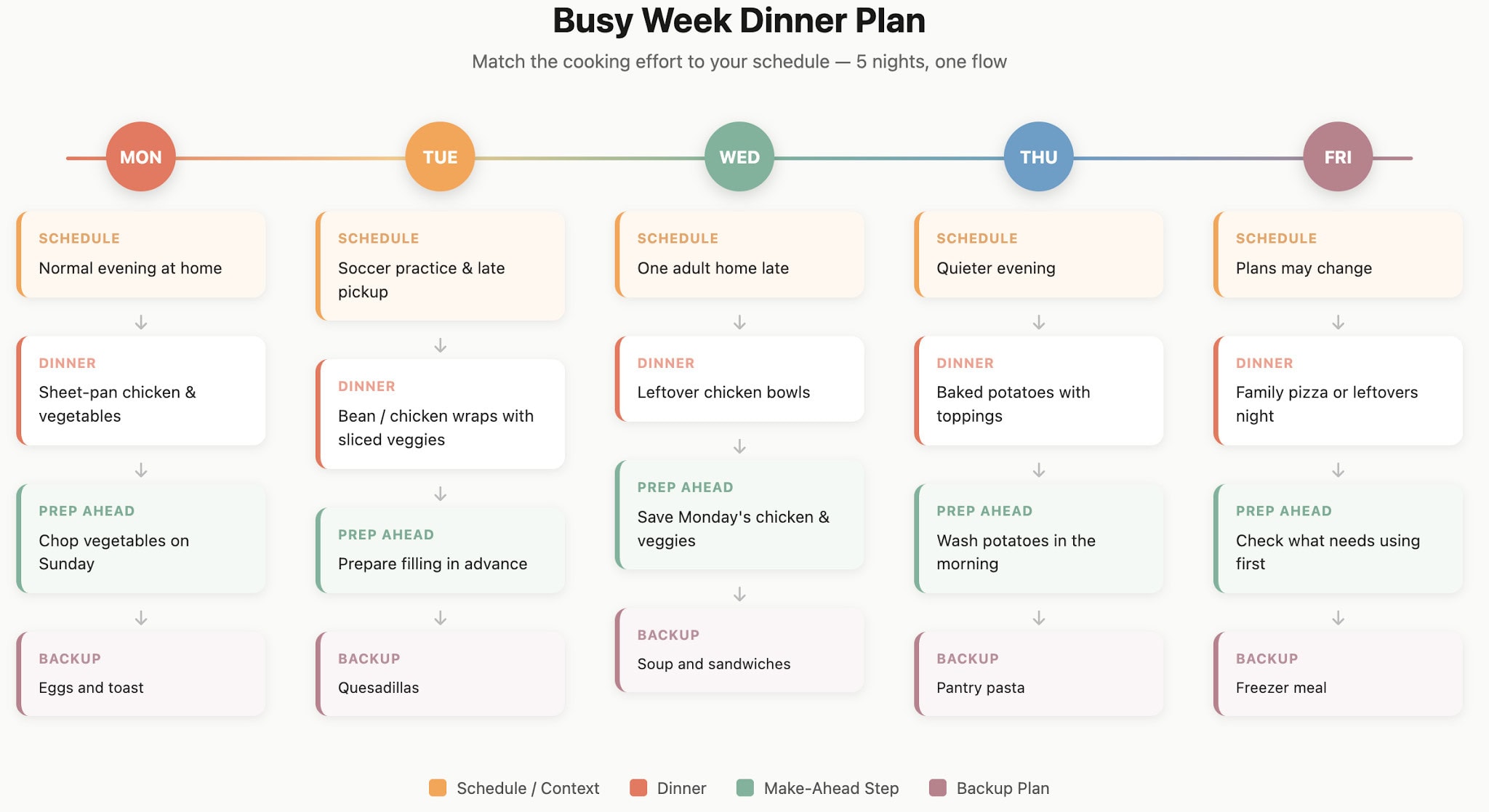
If Thursday’s appointment moves later, use the backup dinner and move the baked potatoes to another night. A useful menu is flexible enough to survive a change of plans.
Turn Five Dinner Ideas Into One Smarter Grocery List
Check the refrigerator, freezer, and pantry before adding meal ingredients to your grocery list. This simple check shows what you already have, what needs to be used soon, and what is genuinely missing.
For Tuesday’s wraps, for example, you might find tortillas and canned beans but still need cheese, lettuce, and a vegetable side. Add only the missing ingredients in the quantities your household is likely to use, then repeat the process for the other dinners.
Group the final list by produce, refrigerated foods, pantry items, and frozen foods. Add breakfast, lunch, and snack essentials before you finish; dinner ingredients alone rarely cover a full week.
When the menu changes, check the list again before buying more food. Moving pasta night does not necessarily mean adding another dinner’s worth of groceries if your backup ingredients are already at home.
Put Dinner Plans Where the Whole Family Can See Them
A visible, shared menu makes it easier for more than one person to help with dinner. A plan stored only on one person’s phone can be missed by everyone else, so choose one household location for meals and the activities that affect them.
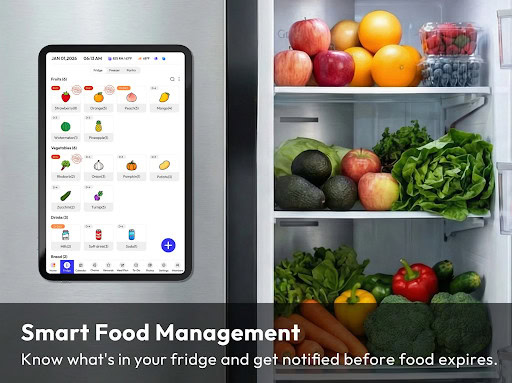
That shared place could be a paper calendar, a kitchen whiteboard, or a digital display. Everblog FridgeCal combines a meal planner, family calendar, and custom lists on a fridge-mounted display. Its companion app also allows family members to manage plans while away from home.
Start with this week’s dinners and the schedule items that affect them. An older child might check which side dish needs preparing, while a partner could review tomorrow’s dinner before the evening ends.
The display or calendar supports the routine, but it does not assign responsibility on its own. Agree on who updates the menu when plans change, who checks the grocery list before shopping, and who starts any make-ahead tasks.
Try the Two-Minute Review That Makes Next Week Easier
A two-minute review turns one week’s experience into an easier plan for the next. Ask which dinners fit the schedule, which ingredients went unused, and which meals the family would happily repeat.
Keep the easy wins, move time-consuming meals to quieter nights, and remove dinners nobody wants again. Over time, that short list becomes a reliable family rotation built around your real schedule rather than an ideal week.
Family Meal Planning Questions, Answered
What’s the Easiest Way to Start Meal Planning?
Start with three dinners rather than trying to plan the whole week. Check your schedule, choose familiar meals, and list only the ingredients you are missing. Add more days once that routine feels manageable.
How Can I Meal-Plan for Picky Eaters Without Cooking Twice?
Choose meals with separate components, such as wraps, grain bowls, baked potatoes, or snack plates. Include at least one familiar option and let family members choose from the available fillings, toppings, or sides.
Do I Really Need to Plan Every Meal?
No. Begin with the meal that creates the most daily stress, which is dinner for many families. Add breakfasts or lunches later only if planning them would make the week easier.
What Should I Do When the Weekly Meal Plan Changes?
Move the planned meal to another day or use one of your backup dinners. Check any fresh ingredients first and prioritize foods that need to be used soon.
How Many Dinners Should I Plan Each Week?
Plan only as many dinners as your household is likely to cook. For many busy families, four or five planned dinners plus a leftovers night and a flexible night is more realistic than seven separate recipes.
Make “What’s for Dinner?” Easier to Answer
Give next week’s menu one clear job: make the busiest evenings easier to handle. Choose a few familiar dinners, match them to the calendar, build one grocery list, and keep a backup meal ready.
Then put the plan somewhere the whole household can check it. A shared system will not prevent every last-minute change, but it can make the next “What’s for dinner?” much easier to answer.
More Easy Meal Ideas for Busy Families
Once you have a simple meal-planning routine, a few more shortcuts can make busy weeknights even easier. Here are some helpful ideas from Life is Sweeter by Design:
- Life Hacks to Make Things Easier for Busy Parents — practical tips for rotating family favorites, keeping backup meals on hand, maintaining a running grocery list, and organizing a busy household.
- How to Create Special Family Memories Centered Around Food — ideas for making grocery planning, cooking, and shared family meals part of your weekly routine.
- Easy Air Fryer Breakfast Burritos — a make-ahead meal idea designed for rushed weeknights when everyone is heading in different directions.

- Simple Ways to Make Home Maintenance Less Stressful - September 15, 2026
- Bathroom Flooring Ideas That Balance Style and Practicality - September 15, 2026
- Red Light Spa Near Me vs. At-Home Red Light Panel: Which Is Better? - September 15, 2026