Turning movie night into an actual event comes down to six small, deliberate decisions: choosing the film in advance, setting up the seating to face the screen, switching to a single lamp behind the TV, giving the sound a minor boost, having snacks ready before you press play, and putting phones in another room.
None of them require new gear. Most take under five minutes. Together, they close the gap between having a film on in the background and actually watching one.
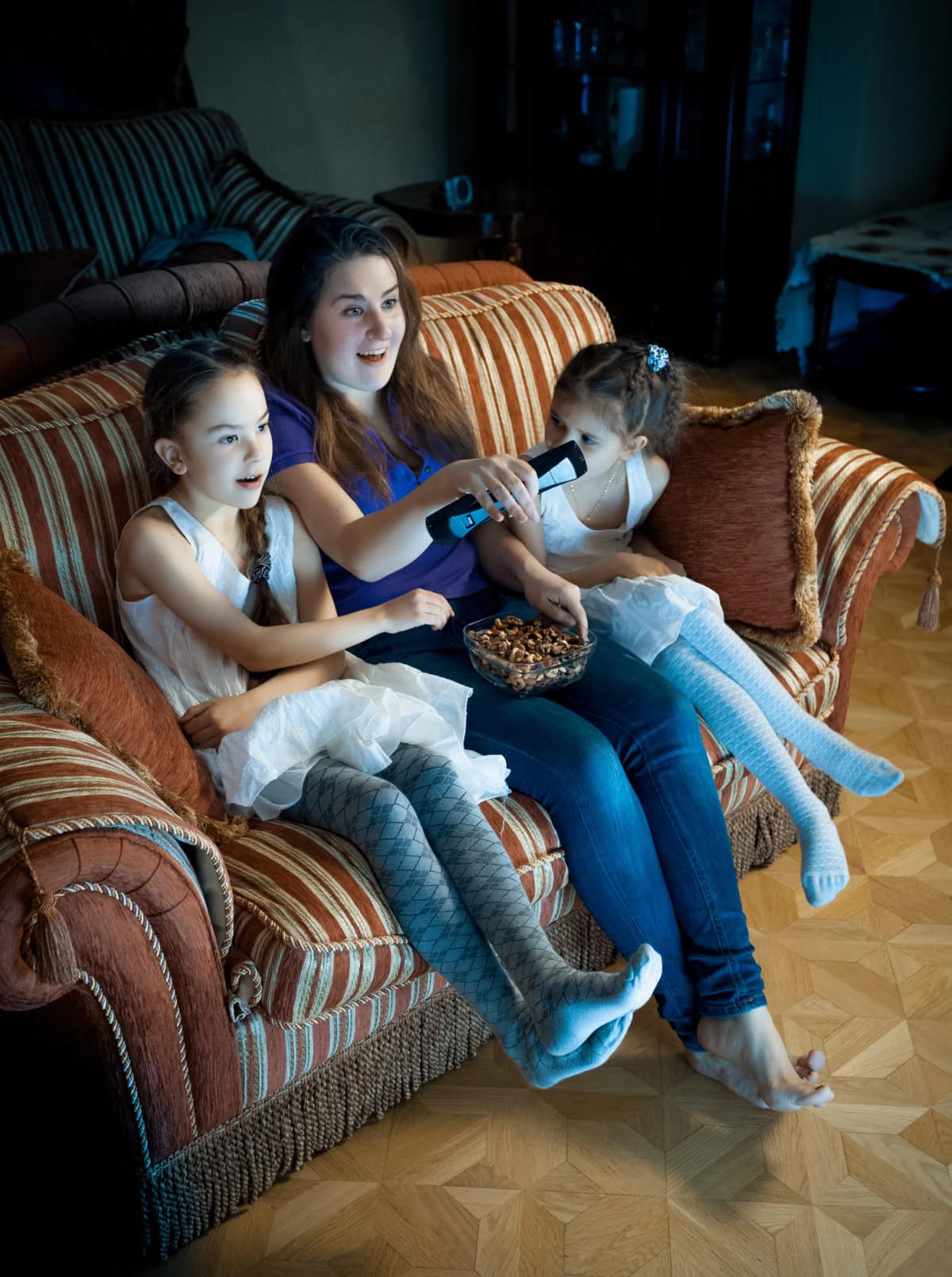
There Is a Difference Between Having a Film On and Having a Film Night
You know the version where nobody commits to the screen. The television plays loudly, one person half-watches while scrolling on a phone, and the film serves as background noise. That defines having a movie on rather than hosting an actual event.
A true viewing shifts the room into a space meant for focus. Everyone settles in with chosen snacks while the lighting changes to match the screen. You can flip this dynamic through a few deliberate choices that prepare the household for the opening credits.
1. Pick the Film Before the Night Starts
Forty minutes of remote scrolling kills a viewing experience before it begins. By the time someone lands on a title, half the room loses interest and fatigue sets in. The fix requires choosing the movie well before you sit down.
Rotate picking privileges through the household so one person decides each week. Keep a running watchlist in a shared notes app or on a physical list stuck to the fridge. Everyone can add options across the week, which ensures you never start from scratch on a Friday night.
If a disagreement arises between two solid choices, flip a coin and hit play. A kids’ pick might mean watching Encanto for the fourth time this month, but when your turn arrives, maybe The Goonies or Jurassic Park finally gets its moment.
| Pro Tip: The key isn’t just deciding early; it’s eliminating the debate. Rotate who has final say and keep a running watchlist on the fridge so you’re choosing from a pre-approved list, not starting from scratch. |
2. Actually Set Up Your Seating
A feature-length runtime requires two hours in a single position. Most living rooms prioritize conversation over viewing angles, with chairs facing inward and sofas anchoring the center space. That layout works perfectly for a dinner party but leaves viewers craning their necks during a double feature.
Pull all available seats forward to face the screen directly so everyone views the action at roughly the same level. Bring in floor cushions or a sturdy pouf from the bedroom for extra capacity. You can also stack a couple of bean bags near the front so younger viewers claim their own territory.
If you want a more permanent solution for frequent viewings, Home Reserve’s modular couch with hidden storage allows you to reconfigure the sections into a curved viewing layout before the movie and return them to a conversational shape afterward. Built-in seat compartments hold heavy throw blankets or remotes so nobody has to hunt for supplies in the dark. Washable covers ensure that spilled popcorn butter or a dropped drink requires only a quick wipe rather than a panicked cleaning session.
3. One Lamp, Behind the Screen
Bright overhead fixtures flatten a living space and make the television screen feel harsh against a white ceiling. Your eyes constantly adjust between the bright display and the illuminated room behind you. This constant refocusing causes genuine eye strain over a two-hour runtime.
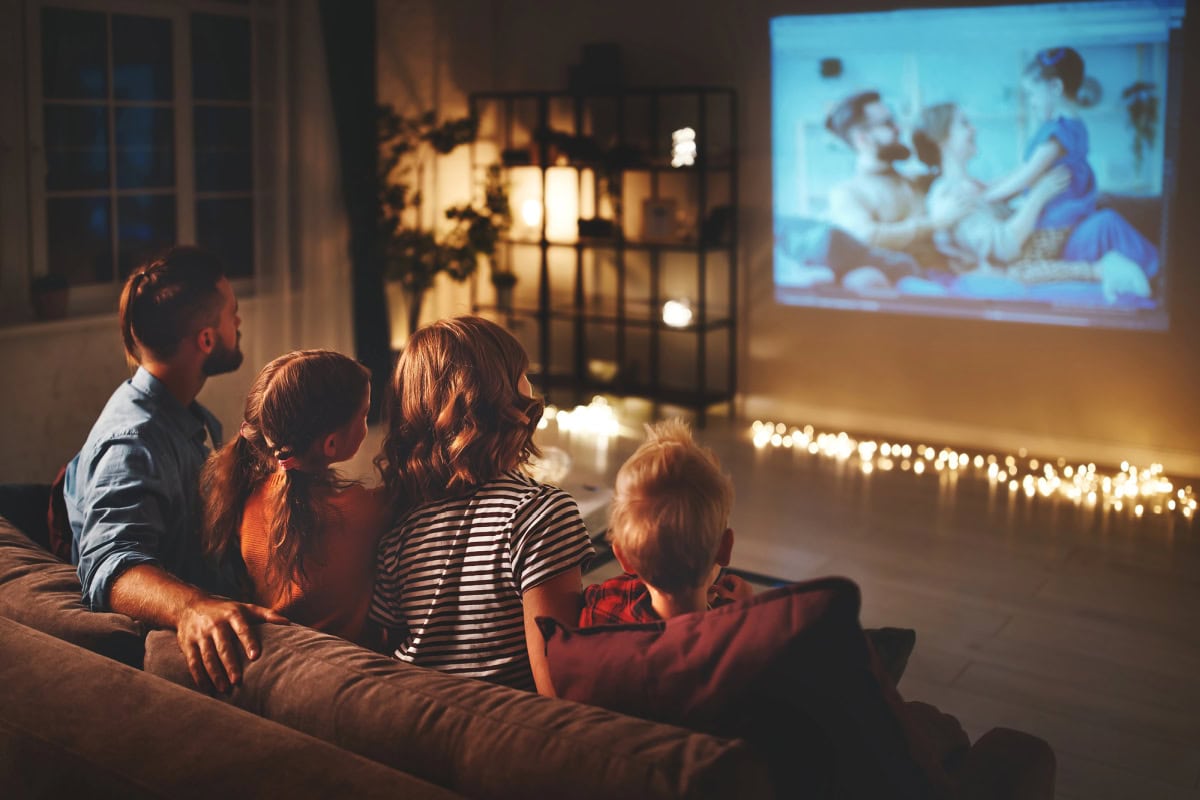
The simplest correction involves placing a single lamp right behind or just to the side of your television. This creates bias lighting, which casts a soft glow against the wall and reduces the sharp contrast between the display and a dark room.
You do not need smart bulbs or expensive dimmer switches because a standard table lamp equipped with a warm bulb handles the job perfectly while letting your eyes relax through the second act.
4. Give the Sound a Small Boost
Built-in television speakers often struggle with basic audio mixing. Dialogue gets muddy, subtle sound effects vanish entirely, and sudden action sequences send someone diving for the volume button. Adding a basic soundbar resolves the most frustrating parts of modern audio compression.
It spreads sound evenly across the viewing area and makes whispered dialogue noticeably clearer. Most models connect in about ten minutes via a single optical cable or a wireless Bluetooth sync. Keep in mind that entry-level equipment lacks the power to fix room echo or deliver deep low-frequency rumbles.
A basic model provides a legitimate audio upgrade for a standard living room without breaking the bank. Pushing past a sensible budget introduces diminishing returns unless you plan to install a full surround system. Keep your expectations realistic to enjoy the immediate clarity improvements.
| Important: A budget soundbar clarifies dialogue beautifully, but don’t expect cinema-level immersion. Its true enemy is room echo, not lack of power. Manage expectations; it’s a clarity upgrade, not a full transformation. |
5. Have the Food Ready Before the Film Starts
Nothing breaks the tension of a good scene quite like someone standing up to fetch more popcorn. Each trip to the kitchen creates a small interruption, and enough pauses will turn the movie back into background noise. Prepare all snacks and beverages before anybody touches the remote control.
Set out large shared bowls of popcorn alongside smaller plates of easy finger foods like pretzels or chocolate pieces. Pour the drinks in advance and keep a stack of paper napkins resting on the coffee table. If your seating includes storage compartments underneath the cushions, store extra throw blankets right there so everyone stays anchored when the room inevitably gets chilly.
6. Phones Out of the Room
You could skip every other item on this list and still host a highly successful screening. If everyone sits around half-watching with a smartphone in their hand, the optimized lighting and upgraded seating setups no longer matter. The effort to create an atmosphere falls flat if half the audience is checking social media feeds.
While media multitasking remains common in the modern work environment, bringing that habit into the living room ruins a film. Leaving the devices in the kitchen introduces just enough physical friction to break the scrolling habit. Nobody reaches for a screen out of pure muscle memory during a slow scene because getting up requires actual effort.
Someone might grumble at the suggestion initially, but they will appreciate the focus by the time the credits roll. Removing the temptation entirely prevents passive scrolling during quieter dialogue scenes. Whether you are watching Toy Story with a seven-year-old or tackling a foreign thriller, remaining present defines the entire experience.
| Key Insight: This step isn’t about willpower; it’s about friction. The five-second walk to the kitchen is just enough effort to break the mindless scrolling reflex, protecting the entire night’s setup from a silent killer. |
The Bottom Line
The chosen title sits ready, the modular seating faces forward, and heavy blankets rest within easy reach. A single warm light stays on while the harsh overhead bulbs stay dark.
Pre-planned snacks sit on the table, and distracting devices remain charging in another room. You do not need a specialized projector setup to change how your household consumes media.
| Author Profile: Home Reserve is the leading manufacturer of adaptable modular furniture for families seeking durable, sustainable solutions for everyday living. |

- 6 Ways To Turn Movie Night Into An Event - November 18, 2026
- How to Help Your Child Feel Welcome on a New Volleyball Team - November 18, 2026
- How to Bring Parents Together Around a School Playground Project - November 18, 2026