“Freshness” doesn’t mean the same thing for every snack in your pantry. For potato chips, crackers and crisp cookies, freshness is mostly about crunch, and avoiding the flat, slightly rancid flavor that shows up once oxidation sets in. For soft cookies, the goal is almost the opposite: keeping enough moisture in the cookie that it doesn’t turn hard and dry.
That’s why “just keep it airtight” is only half the advice. Airtight against what, exactly? Moisture coming in, or moisture leaving? The answer depends entirely on what’s in the bag, which is also why the same pantry habits that keep your crackers crisp can quietly ruin your cookies.
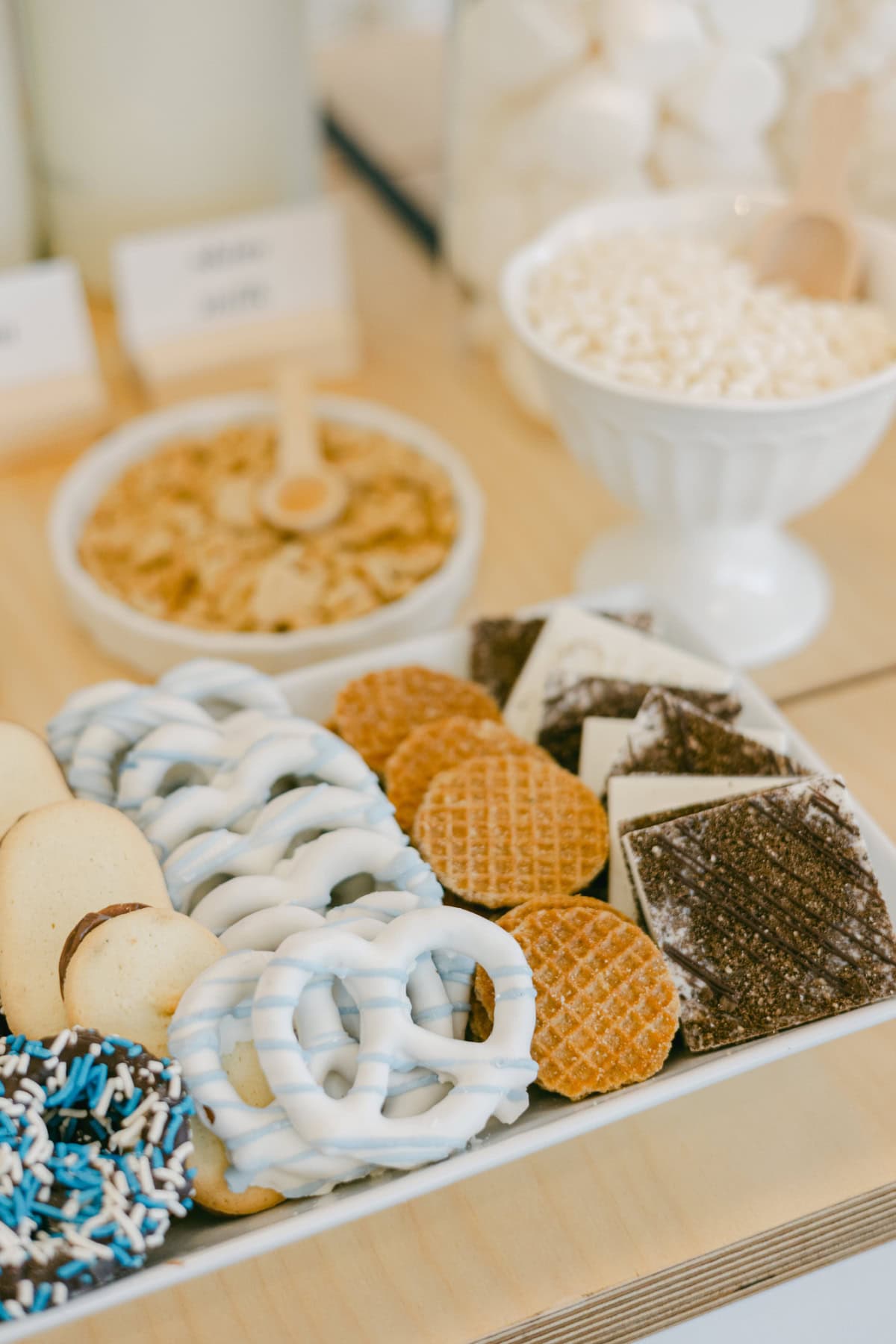
Why Do Cookies and Snacks Lose Their Freshness?
Several things happen at once once a package is opened, and they don’t all point the same direction.
Dry, crisp products like chips and crackers pull moisture in from the surrounding air. Soft cookies can lose moisture to a drier environment and firm up. Fats in things like chips, nuts and buttery cookies slowly react with oxygen, which is what produces that stale, slightly “off” flavor over time, separate from any texture change. Heat speeds up both moisture movement and fat oxidation. Light can degrade fats and flavor compounds in some products. Every time a bag is opened, some of whatever controlled atmosphere existed inside gets replaced with regular room air. And packed close to something aromatic, like coffee or spices, some snacks will pick up smells they shouldn’t have.
Worth saying clearly: going stale is usually a quality problem, not a safety one. A cracker that’s lost its snap hasn’t necessarily become unsafe to eat, it’s undergone a physical change, not spoiled in the food-safety sense.
The Moisture Problem Is More Interesting Than It Looks
Here’s a distinction that gets flattened in most snack-storage advice: relative humidity describes the air around the food. Water activity, usually written aw, describes how available the water is within the food itself, and it’s water activity that actually governs how a food exchanges moisture with its surroundings.
A 2024 study examining 108 commercially available snack-chip packages measured water activity in commercial chip samples at roughly 0.18 to 0.24, well below the level where crispness starts to break down. Separately, research on sensory crispness testing potato chips, popcorn, corn curls and saltines found that these foods generally became sensorially unacceptable somewhere between about 0.35 and 0.50 aw.
Put plainly: a chip doesn’t need to feel damp to lose its crunch. It only needs to pick up enough moisture to nudge its water activity from the 0.2 range up toward that 0.35–0.5 zone, and the eating experience changes noticeably before the snack looks or feels wet at all. That gap is smaller than most people assume, which is part of why an open bag of chips can go soft in an afternoon.
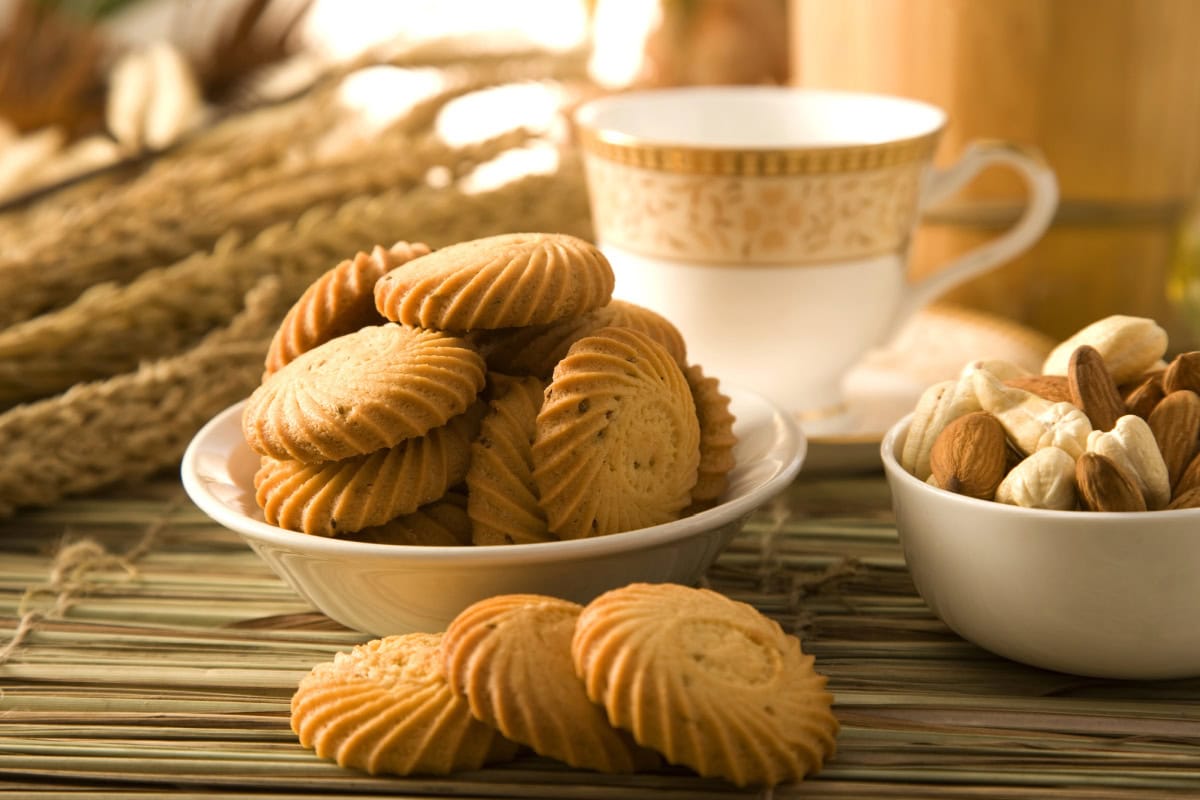
Why Chips and Crackers Can Go Soft While Soft Cookies Can Go Hard
This is the part that trips people up, because the fix for one snack is the opposite of the fix for another.
Crisp, low-moisture snacks want to gain moisture from humid air, that’s moisture migration working in the direction of the food. Soft cookies, which start out with more internal moisture than their surroundings, tend to lose moisture to a drier environment and gradually stiffen.
Which means the well-meaning habit of tossing crackers and homemade cookies into the same tin can actually work against both of them. Moisture doesn’t stay put, it moves from the higher-moisture item toward the drier one until the two get closer to equilibrium, which can leave your crackers softer and your cookies not quite as soft as they started. If you’ve got a batch of homemade cookies cooling on the counter, it’s worth keeping them in their own container rather than sharing space with anything crunchy.
What Happens Every Time You Open the Bag?
Opening a package does something simple but easy to underestimate: it swaps out whatever protective atmosphere existed inside for regular room air, humidity, oxygen and all.
For crisp snacks specifically, that incoming humidity is the main threat. Each additional minute the bag sits open is more opportunity for moisture to start working its way in. Oxygen exposure increases too, which matters more for fattier snacks than for something like a plain cracker.
Closing a zipper quickly, or moving the food into a properly sized airtight container, meaningfully slows this process. It’s worth being honest about what it doesn’t do, though: a resealable zipper is a decent barrier against ongoing air exchange, but it isn’t the original heat seal, and it doesn’t recreate any modified atmosphere the manufacturer packed the product with in the first place.
Airtight Container or Original Package — Which Is Better?
It depends on what you’re working with, and on the snack itself.
If the original package has a zipper or resealable strip that still closes cleanly, keeping the food in it is genuinely fine, and it’s certainly the most convenient option. If the package doesn’t reseal well anymore, folded-over tops and binder clips are better than nothing, but a properly sealed airtight container can provide better protection than simply folding over an opened bag, especially for anything you want to keep crisp for more than a day or two.
There’s a second consideration people usually miss: fragility. Delicate chips get crushed more easily inside a soft bag than inside a rigid container, so for something like kettle chips or thin crackers, a hard-sided container after opening protects both texture and shape, not just moisture level. And when you do transfer food to a container, pushing out excess air in a flexible bag, or choosing a container close to the actual food volume, limits how much air gets trapped and re-exchanged every time it’s opened again.
What Major Snack Brands Can Teach Us About Resealing
You can see some of this thinking play out on grocery shelves already.
OREO’s family-size cookie packaging includes a resealable pull tab specifically because the product is designed to be opened and closed repeatedly over days, not eaten in one sitting. It’s a useful reminder that packaging decisions get built around how a product is actually consumed, not just how it looks on day one.
Lay’s is a good example of the opposite end of the spectrum, a low-moisture, crisp snack where crunch is essentially the whole point of the eating experience, which is exactly why moisture control matters so much for that category specifically.
7 Practical Ways to Keep Opened Snacks Fresher
- Reseal the package immediately after serving, don’t wait until you’re done snacking.
- Don’t leave crisp snacks sitting open in a bowl for hours while you eat, humidity works on them the whole time.
- Keep snacks away from heat sources and direct sunlight, both accelerate moisture movement and fat oxidation.
- Switch to an airtight container once the original package stops resealing effectively.
- Store crisp and soft snacks separately, not in the same tin or drawer.
- Keep snacks away from strongly aromatic foods unless their container actually blocks odor transfer.
- Buy a package size that matches how fast your household actually eats it.
That last point connects to something genuinely useful from the research. The same 2024 packaging study found that pouches were generally more efficient in their use of packaging material than cans, with that efficiency improving further at larger fill sizes. But efficient packaging and a good after-opening experience aren’t the same thing. A bigger bag might be the better packaging choice on paper, while still being the worse choice for your specific kitchen if it means more product sitting exposed to air for longer once it’s open. Bigger isn’t automatically better, it depends on how quickly you’ll actually get through it.
What Type of Packaging Should a Cookie or Snack Brand Choose?
There is no single best package for every cookie or snack. The right structure depends on the product’s moisture sensitivity, fat content, desired shelf life, serving pattern, distribution conditions and how often consumers are expected to reopen the package.
For crisp cookies, crackers, chips and similar products, moisture barrier tends to be the priority, with oxygen barrier mattering more for products with meaningful fat content. Light barrier matters for some oxidation-sensitive foods specifically. Good seal integrity is non-negotiable regardless of format, and a resealable zipper earns its place on anything meant to be eaten across multiple sittings.
Soft cookies flip part of that equation: the concern is often preventing unwanted moisture loss just as much as blocking external moisture and oxygen, and the right barrier spec really should come from the actual formulation and target shelf life rather than a generic assumption.
Single-serving snacks generally don’t need resealability at all, package size and seal quality matter more there. Multi-serving or family-size products are where reclosure earns its cost, since the package is realistically going to be opened and closed many times before it’s finished.
In practice, this shows up across a handful of common flexible formats: stand-up pouches, flat pouches, pillow bags, gusseted bags, and rollstock converted on automated packaging lines, none of which is universally “better,” each suits different fill weights, closure needs and production setups. Brands developing a new cookie, cracker, chip or jerky product can also compare flexible formats from manufacturers such as BioPouches, which offers custom snack and jerky packaging in different pouch structures, material options and closure configurations.
Questions a Snack Brand Should Ask Before Ordering Packaging
- Is the product meant to stay crisp, soft, or chewy?
- Is it high enough in fat to be oxidation-sensitive?
- What’s the required unopened shelf life?
- How long should it stay acceptable after opening?
- Single-serving or multi-serving?
- Does it need a zipper?
- Does it need light protection?
- How much headspace does filling actually require?
- Manual fill or automated line?
- What seal conditions will production use?
- What temperature and humidity swings might it see in distribution?
One of the most important questions is whether the finished package has actually been shelf-life tested with the real product inside. A label that says “high barrier” isn’t proof of anything on its own. Testing the actual film, seal and product together, under realistic distribution conditions, is what actually tells you whether the packaging will do its job.
A Simple Freshness Guide by Snack Type
| Snack type | Main freshness concern | After-opening priority |
| Potato chips | Moisture uptake, fat oxidation | Reseal fast, minimize air exposure |
| Crackers | Moisture uptake | Reseal or transfer to airtight container |
| Crisp cookies | Moisture uptake | Keep separate from soft/moist foods |
| Soft cookies | Moisture loss | Airtight storage, avoid drying air exposure |
| Pretzels | Moisture uptake | Reseal promptly, avoid humid storage |
| Nuts | Fat oxidation | Cool, dark storage; limit air exposure |
| Popcorn | Moisture uptake, rapid staling | Airtight container, consume relatively quickly |
| Jerky | Varies by formulation | Follow the manufacturer’s specific storage instructions |
Jerky in particular varies a lot by brand and moisture content, so this is one category where following the package’s own storage guidance matters more than any general rule.
Storage Mistakes That Seem Harmless
A few habits that quietly work against freshness: leaving a bag open on the coffee table through a whole movie, folding the top over loosely instead of actually sealing it, storing snacks near a warm appliance like a toaster or oven, mixing different snack types in one shared container, and keeping crisp snacks in a naturally humid spot like above the stove or near the sink.
Refrigeration isn’t automatically the answer either. It’s genuinely useful for some products and unhelpful, or even counterproductive, for others, since moving food between temperatures can cause condensation that introduces exactly the moisture problem you were trying to avoid. Following the manufacturer’s stated storage instructions is a better default than assuming colder is always better.
In The End
Freshness comes down to a balance between the food and its environment, and that balance points in different directions depending on what you’re storing. Crisp snacks lose their appeal when they gain moisture. Soft cookies lose theirs when they lose moisture. Oxygen, heat, light and repeated opening chip away at quality from other angles entirely.
The most useful habit isn’t a single trick, it’s asking what specific texture you’re actually trying to protect, then limiting the exposure that works against it: reseal promptly, separate crisp from soft, and let the manufacturer’s storage instructions guide anything you’re unsure about.

- How to Choose the Right Smart Battery Charger for 6V, 12V, and 24V Batteries - September 24, 2026
- How to Get a Family Dinner on the Table With One Oven - September 24, 2026
- Lead Paint Containment Explained: How to Keep Renovation Jobs Safe and Compliant - September 24, 2026