You get the kids to bed. The house is quiet for the first time all day. You sit down, pick up your phone, and forty-five minutes later you feel… worse. Scrolling doesn’t rest your brain. It just swaps one kind of noise for another.
Real downtime looks different. It means doing something that pulls your attention away from the mental to-do list – not because someone needs you, but because you chose it. Creative hobbies do exactly that. They occupy your hands and your brain just enough to shut out the noise without adding to your load.
The research on this is surprisingly detailed. A 2023 Nature Medicine study of 93,000 adults across 16 countries found that people with hobbies reported better health, greater happiness, and fewer depressive symptoms than those without hobbies.
The 2023 American Psychiatric Association poll found that 46% of Americans turn to creative activities specifically to relieve stress or anxiety, and that 71% of people who rated their mental health as “very good” or “excellent” engaged in creative activities more often than those with lower ratings. This isn’t a feel-good theory. There’s data behind it.
The 10 hobbies below are easy to start, don’t require artistic talent, and fit into a real mom’s schedule. Even 20 minutes counts.

1. Paint by numbers: structured art that anyone can actually finish
This one tops the list because it removes the biggest barrier to creative hobbies: the blank-canvas fear. You’re not making artistic decisions. You’re following a numbered system that produces a real, finished painting. That structure is the whole point.
The repetitive motion of matching color to section has a measurable calming effect. Research published in the Journal of Psychosocial Nursing (a 2025 scoping review of 12 studies) found that creative hobbies consistently reduced depression, anxiety, and stress across participants. The focused, repetitive nature of paint by numbers puts your brain in a flow state – that absorbed, almost meditative zone where time passes, and problems shrink.
Modern kits aren’t the cheap cartoon sets from childhood either. If you want something meaningful, you can explore Number Artist custom options and turn a family photo into a paint-by-numbers kit – the kind of project that ends up framed on the wall rather than tucked in a drawer. No prior art experience needed. Sessions can run 20 minutes or two hours. You decide.
2. Knitting or crocheting: the original meditative craft
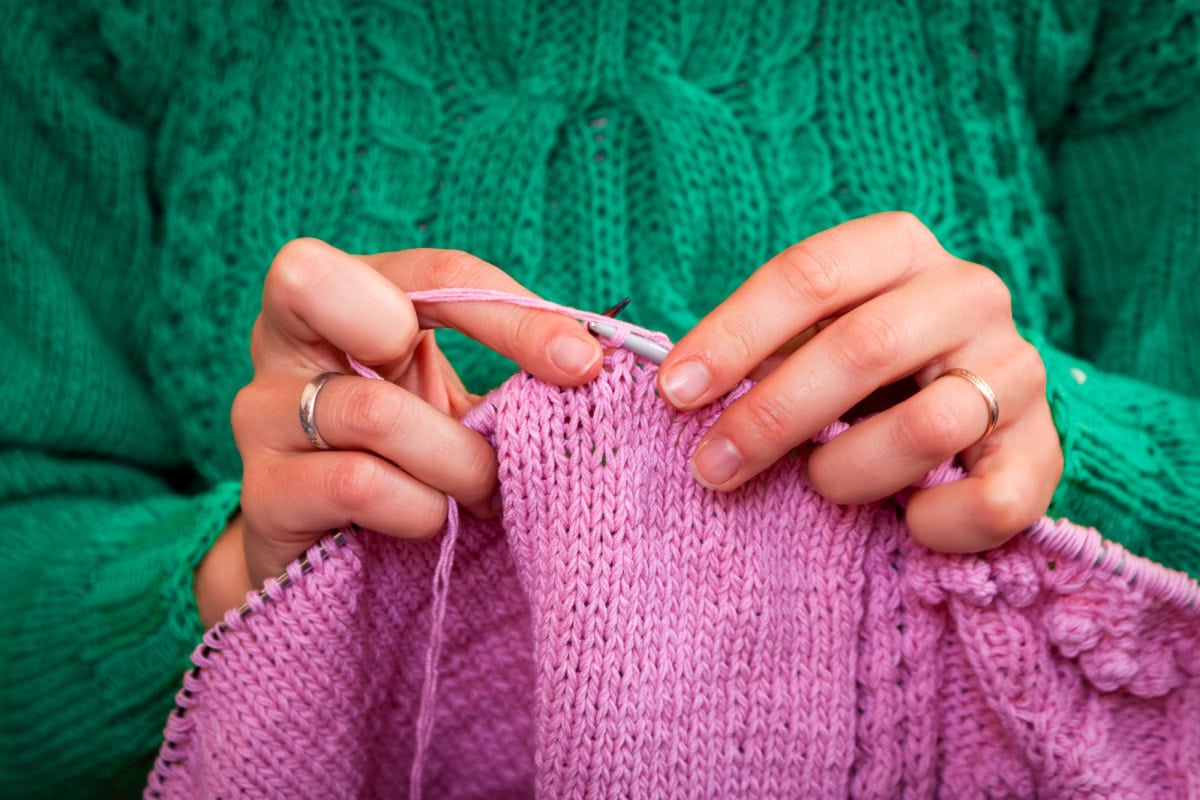
The rhythmic, repetitive motion of stitching is calming in a well-documented way. Neurologically, it mimics the effects of meditation – your focus narrows, your breathing slows, and the mental chatter quiets down. You’re also making something real, which feeds the need for accomplishment that busy moms often don’t get during days full of invisible labor.
Crocheting is slightly easier to start than knitting – one hook rather than two needles, and it’s harder to drop stitches. Both are portable. You can knit during soccer practice, in a waiting room, or parked in front of a show you’ve already seen three times. Starter kits run $15 to $25, and YouTube has free beginner tutorials for every level. If you want a hobby that travels well, this one’s hard to beat.
For evenings when the whole family is home, and you want something low-key together, it pairs well with family fun without screens – card games, puzzles, and other unplugged activities that don’t require anyone to coordinate schedules.
3. Journaling: the hobby that costs almost nothing
Journaling gets dismissed as diary writing, which puts a lot of people off. It’s actually much broader than that. Gratitude lists, brain dumps, creative writing, art journaling with sketches and clippings, stream-of-consciousness free-writing – it all counts. The common thread is putting something from your head onto paper, which creates distance and perspective that purely mental processing can’t.
Psychologists have recommended expressive writing as a stress-reduction tool for decades, and the 2025 PubMed scoping review found that hobbies tied to self-expression and a sense of purpose produced the most consistent anxiety reduction across participants. You don’t need to be a writer. You need a notebook and a pen. Ten minutes before bed or right after the kids leave for school is enough to build a real habit out of this.
4. Baking something new: creative productivity in your own kitchen
Baking works because it requires just enough focus to crowd out everything else. You have to measure, sequence, and pay attention – the process occupies your brain in a useful way. It also produces something shareable and celebratory, which adds social reward on top of the personal one.
The key here is “something new.” Baking dinner rolls out of habit feels like work. Trying croissants for the first time – or a cake flavor you’ve never attempted, or a bread style you’ve always wanted to learn – feels like play. The process is the point, and the output is a bonus. This is one of those hobbies that slots naturally into family life because everyone else benefits from it too.
5. Gardening: the hobby with real numbers behind it
Gardening might be the most underrated stress-relief activity for moms who think they’re not “outdoor people.” Research from Harvard Health Publishing found that hobbies – including outdoor and nature-based ones – are consistently tied to happiness and well-being, with gardening specifically linked to reduced cortisol levels and higher life satisfaction.
It works with any space. A windowsill herb garden counts. A few containers on a patio count. You don’t need a yard or a big investment. Start with basil and mint – they’re nearly impossible to kill, they smell good, and you’ll actually use them in dinner. Very low bar to entry, very real payoff.
6. Photography: seeing your everyday differentl
You don’t need a camera. Phone photography is a genuine creative practice. The skill is in learning to notice – light direction, composition, the moment right before a moment. Developing that awareness retrains your brain to look for beauty in ordinary things rather than cataloging problems. That’s a valuable shift for anyone, and especially for moms whose mental default is problem-solving mode.
It costs nothing to start. Free apps like Snapseed and Lightroom Mobile let you edit on your phone. YouTube tutorials cover composition basics in under 20 minutes. And the output is photos of your kids and your home that you actually want to keep – not just candids, but images you made intentionally. Combine a photography walk with one of these fun outdoor family activities, and the kids get fresh air while you practice.
7. Adult coloring or pattern drawing: no artistic ability requi
Adult coloring books have a dedicated following because they genuinely work. The focus required to stay within lines and choose colors is low-stakes and satisfying – you get the same flow-state benefit as paint-by-numbers with even less setup. Mandalas, botanical patterns, and detailed architectural designs are the most popular, and there are free printable versions of almost everything online.
This is the hobby for 15-minute pockets of time. No mixing, no cleanup, nothing to put away. It draws on the same cortisol-reduction research as other art-based creative practices – making art for two or more hours weekly yields measurable well-being benefits according to Healthline’s review of multiple studies, but even shorter sessions reduce the stress response.
8. Exploring a new cuisine: cooking as creative discovery
This is distinct from daily cooking, which is a chore. Exploring a new cuisine – trying your first Moroccan tagine, learning to make Japanese ramen broth from scratch, working through a Thai recipe you’ve had saved for months – adds a learning element that daily meal prep doesn’t have.
The cognitive stimulation of learning something new matters here. You’re not just executing; you’re problem-solving and adapting. Free resources make this genuinely zero-cost to start: YouTube channels dedicated to specific cuisines, library cookbooks, and free recipe sites cover everything. It also fits naturally into your existing schedule because dinner was already happening anyway.
9. Puzzles: old-school and seriously underrated
A 1,000-piece puzzle worked on over a week delivers the same focused engagement as screen time but without the stimulation hangover. You sit down, work for 30 minutes, and your brain actually rests. There’s something satisfying about physical pieces coming together that digital games can’t quite replicate.
On the research side, a Japanese study of 50,000 adults age 65 and older found that dementia risk decreased as the number of hobbies increased, and puzzles are one of the most consistently cited cognitive-protection activities in that literature. Works well as a solo wind-down ritual, and kids can join in without it becoming a whole production. For when you want something with more energy, these family backyard games are a great complement.
10. Brush lettering or calligraphy: slow, deliberate, and surprisingly calming
Modern brush lettering is far more beginner-friendly than traditional calligraphy. Faux calligraphy – tracing letterforms with any pen and then thickening the downstrokes – requires zero special tools and produces genuinely beautiful results within a few practice sessions. The slow, deliberate strokes require real focus, which quiets mental chatter in the same way that other repetitive creative activities do.
Starter brush lettering sets run $10 to $15. Free practice worksheets are available on Pinterest. The output is immediately useful: hand-lettered cards, labels, a framed quote for the kitchen, a gift that looks like it cost three times what it did. If you’re drawn to something that produces a tangible, beautiful result with a low skill floor, this one’s worth 30 minutes of your time.
The hobby that fits you is the one you’ll actually do
No pressure to pick the “right” one or commit forever. The goal is consistent small pockets of enjoyment, not mastery. The Nature Medicine data and the APA poll both point to the same thing: the benefit comes from regular practice, not from being good at something. Two weeks of 20-minute sessions with any hobby on this list is enough to feel the difference.
Pick one. Try it for two weeks. See how you feel on the days you do it versus the days you skip it. That’s all the research you need.
You give everything to everyone else. Giving yourself 20 minutes a day to make something isn’t selfish. It’s what keeps you going.

- 4 Easy Fixes For A Cozy Living Room - June 4, 2026
- 4 Easy Swaps For A Healthier Home - June 4, 2026
- 4 Easy Ways To Reconnect with Family - June 4, 2026