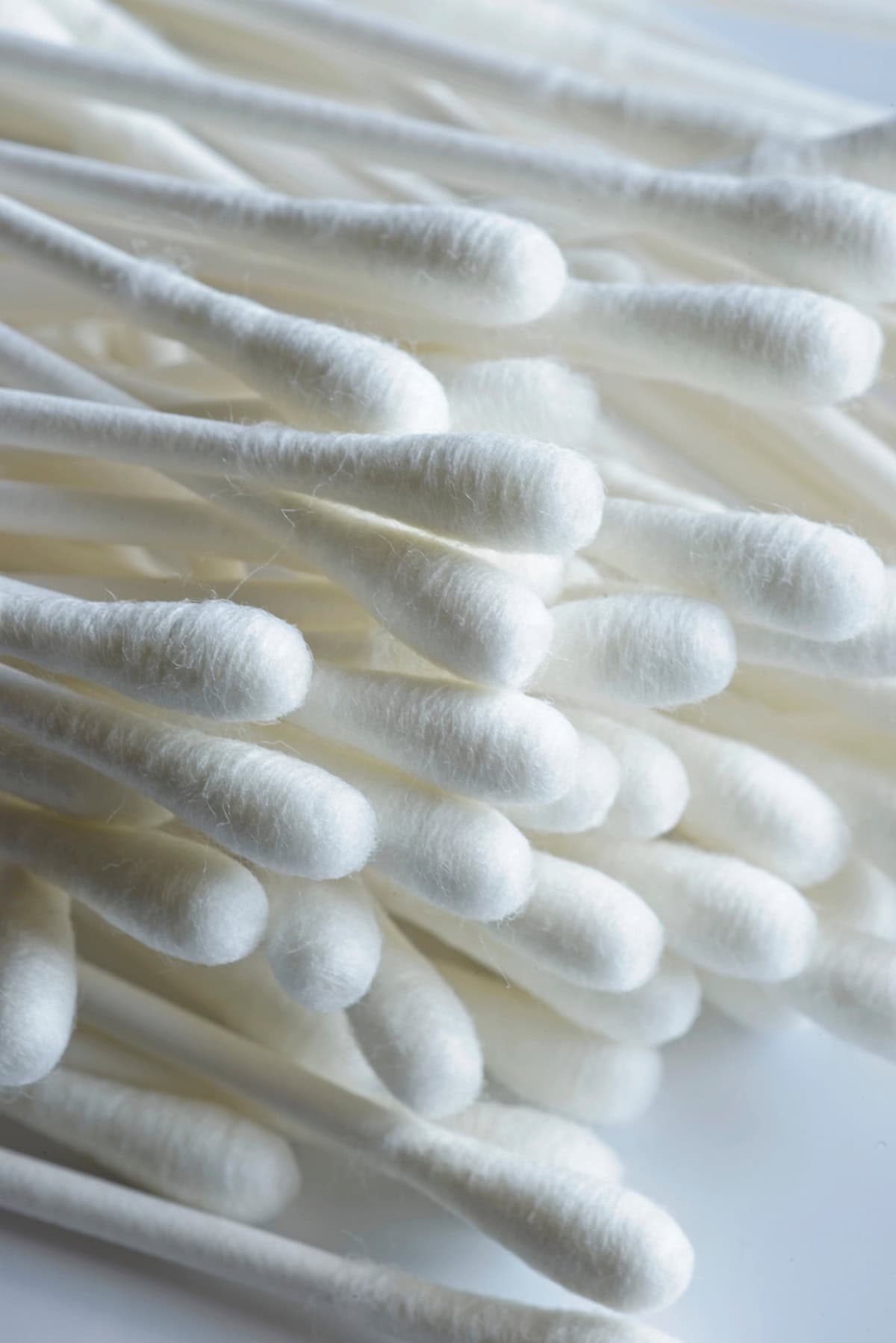
Many of us own Q-tips with the sole purpose of being able to clean our ears with them. But actually, you shouldn’t be putting them anywhere near your ears.
In fact, using cotton swabs can often make your ears worse by causing earwax impaction or even damage to the ear canal. In this post, we’ll explain exactly why this is the case and how you should be cleaning your ears instead.
Why you shouldn’t clean your ears with cotton swabs
Putting Q-tips in your ears could actually damage your hearing. There are a few ways in which this can happen:
- Earwax impaction: While some earwax may end up on the end of the cotton swab, you could end up pushing most of it further into your ear. This can cause ‘impacted earwax’ – hard blockages that can completely muffle hearing and that can be hard to clear due to being so deep.
- Ear canal injury: Digging around in your ear with a cotton swab can also scar the ear canal. This can lead to inflammation or even infection – both of which will affect hearing.
- Eardrum rupture: Poke a cotton swab too far into your ear and you could even rupture your eardrum. Fortunately, eardrums do heal, but expect temporary hearing loss and pain (keeping the ear dry is also essential for preventing infection).
Use cotton swabs for touching up nail polish, applying antiseptic creams to other parts of the body, or cleaning delicate items like electronics – but do not use them to clean your ears.
How should you clean your ears?
Unless you have a blockage, you don’t actually need to clean your ears. In fact, it’s actually healthy to have some earwax to prevent dirt and dust getting in and to provide a waterproof barrier. This post explains more as to why earwax matters for hearing.
Sometimes earwax can overproduce itself and negatively affect hearing. In these cases, consider looking into ear drops, which can soften wax and help it loosen up so that it comes out. Using a washcloth can be an effective way to get rid of earwax around the entrance of the ear, while washing your ear gently in the shower may help to clean out the canal (make sure to remove all water from your ear afterwards, and avoid getting the inside of your ear wet if you have an infection).
Professional ear cleaning is something that you can look into. An ENT, general doctor or audiologist may be able to use treatments like irrigation or microsuction to remove excess earwax safely. They will also be able to check that there is no infection, scarring or inflammation (sometimes this could be the cause of a blocked ear).
Avoid treatments like ear candling and there is evidence that these non-medical procedures can do more harm than good. You should also avoid sticking any other objects in your ear (no pens, hairpins or cocktail sticks) as these are even more likely to cause an injury than cotton swabs.