You pick something everyone will eat, you get it out on the counter, and then you hit the part nobody mentions. The main dish wants the big oven for most of an hour. The vegetables may need a different temperature or cooking time. The rolls need to go in at the very end. And someone at the table is not going to touch any of it regardless.
By the time the last tray comes out, the first one has gone lukewarm, and dinner lands on the table later than anyone planned.
The trick is not cramming everything into one oven. It is deciding which parts actually need it. Most nights, what limits family dinner is not skill but capacity: one appliance, one primary temperature, and more parts to the meal than there are places to put them. Nobody needs a bigger kitchen to fix that.
Why Family Dinner Stalls at the Oven
A standard oven gives you limited space and one primary temperature setting, while a family meal may have several dishes competing for both. So you do what everyone does. You pick a number that seems reasonable, put the main dish in, and hope for the best. The chicken comes out fine. The vegetables come out soft, because they needed more heat and less time than the chicken would allow.
Or you sequence it, which fails in a different way. You roast the vegetables first and set them aside. Then you turn the heat up for the main dish. Then you notice the vegetables have gone cold, and warming them back up means another tray and another wait.
None of that is a recipe problem. The recipes were fine. What you ran into is that one appliance offers a single working temperature and a limited number of shelves, and a family dinner has more moving parts than that.
Count the Jobs, Not the Dishes
Before you settle on a recipe, count the jobs. A family dinner often has four or five of them, and they are not all the same kind of job.
There is the main dish, which takes a while and needs room. There is the bulk side, which also takes a while and needs room. There is something fast and crisp, like a topping or a quick vegetable. There is the second pass, for whoever eats at a different time. And there is the plain version of something, for the person who will not eat it any other way.
Sort those by what they actually need and something useful happens. Two of them want space and time. The rest want heat and speed, in smaller amounts. That is two different problems, and once you have named them that way, it stops making sense to run all of them through the same box on a schedule.
The Jobs That Need Volume
Roasting a whole chicken. Baking a tray of rolls. A casserole. A sheet pan of vegetables for four people. Anything you are actually baking rather than crisping. These need real shelves and a lot of room, because the limit is space rather than heat.
This is where the arithmetic stops working. One oven can handle one of them at a time, so the meal turns into a queue, and the queue is what makes dinner late.
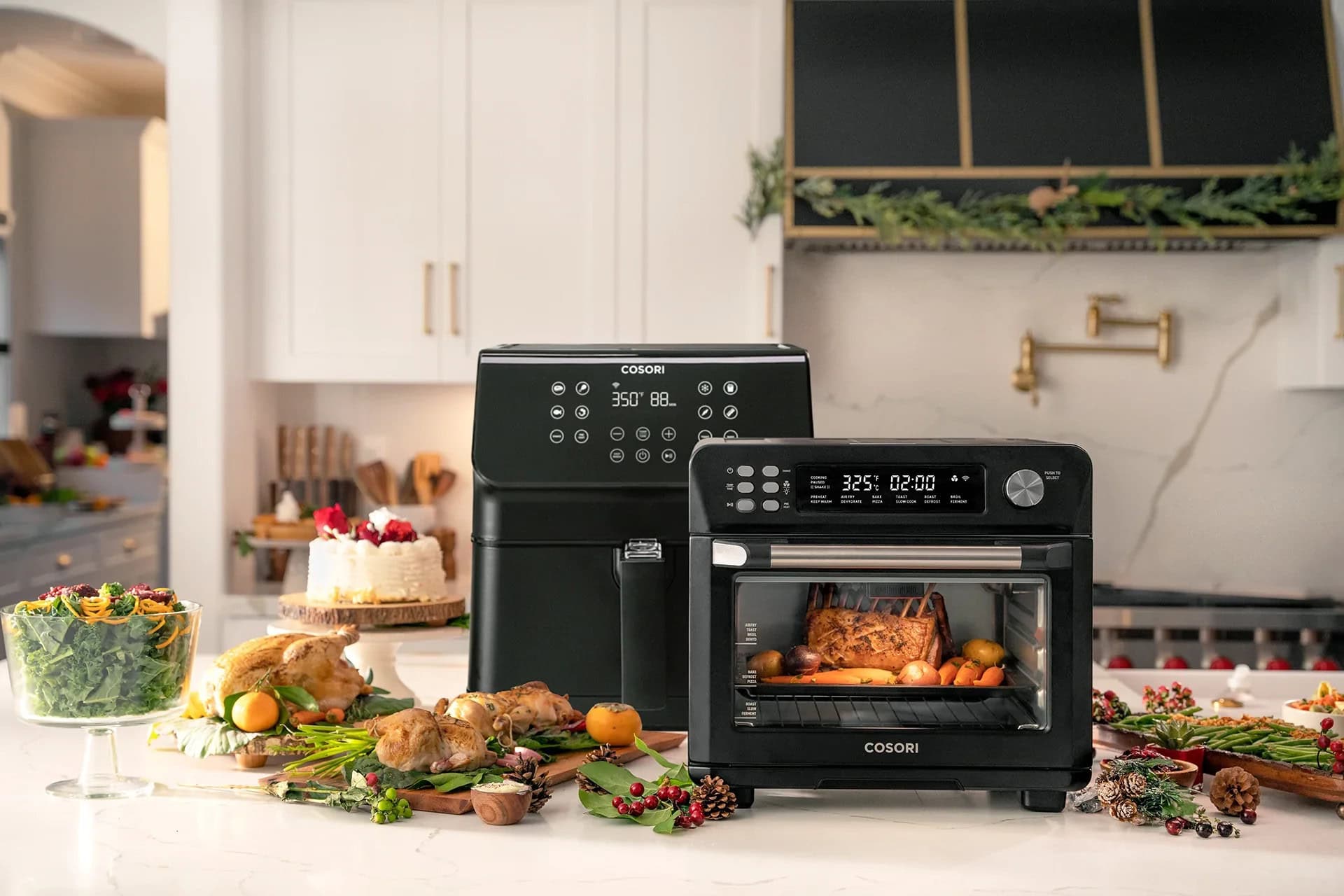
Once you have a second place to cook, the queue starts to break up. A larger countertop oven with multiple rack positions can sometimes handle a main dish and a side at the same time, depending on the model and the foods you are cooking. An air fryer oven combo can take on some of those larger baking, roasting and toasting jobs without tying up the full-size oven, so nothing has to wait for it to empty out.
That also frees the big oven for the job that genuinely needs it, which is what turns a holiday or a big weekend meal back into something you can schedule instead of something you survive.
The Jobs That Need Speed
Everything left on the list is small, fast, and hot. A handful of green beans. A topping that has to go crisp. A single portion that has gone cold on a plate.
Those are poor fits for a full-size oven. You end up heating a large box of empty air around one small bowl, and the result is often a soft finish rather than a crisp one. A basket-style air fryer is a better fit for this kind of job: a smaller volume, air moving fast around the food, and a short run time. That does not mean it is only for tiny amounts, but this is the size of job it handles best.
Where the Second Pass Fits In
The second pass is the part that quietly ruins a lot of family dinners. Someone gets home late from practice. Someone decides halfway through that they no longer want the thing they asked for. Someone wants more of the side and none of the main.
Normally that portion goes in the microwave, comes out hot and soft, and the person eats it without complaint because they are hungry. Fine, until you have spent an hour on dinner and the last plate of it tastes like nothing.
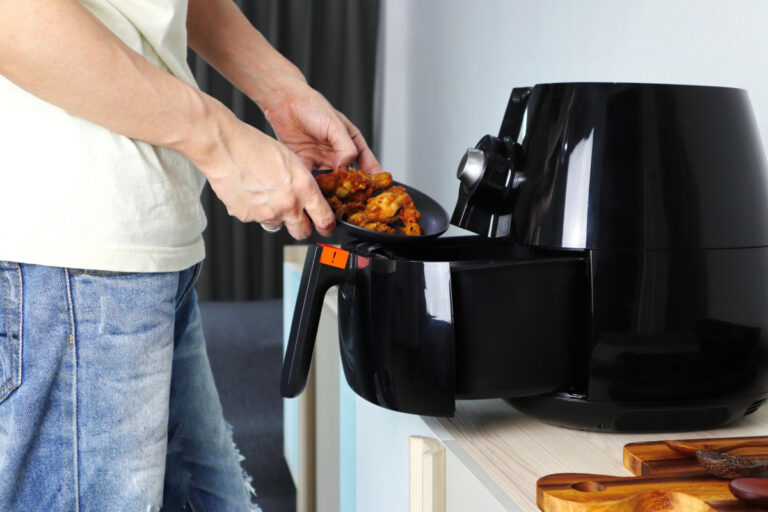
A basket unit earns its keep here. For those smaller jobs, COSORI air fryers can be useful when you want to reheat a portion or crisp a side dish without tying up the main oven. Heat sits close to the food and moves fast, which is why one portion comes back crisp on the outside instead of warmed all the way through. None of it requires the big oven to be free.
That is also how you handle the plain version of a meal for the person who wants nothing touching anything else, cooked quickly and separately, without holding up dinner for everyone else.
Two Spaces, Two Jobs
It is tempting to think of a countertop oven and a basket unit as two sizes of the same purchase. Think of them instead as two different tools with overlapping capabilities, each one best at a different part of the same meal.
A countertop oven with more than one rack position is built for larger quantities: a main dish, a tray of vegetables, a batch of rolls. It can bake and roast in trays rather than portions, which is what you want when the big oven is already occupied.
A basket-style air fryer is built for smaller, faster jobs: crisping, reheating, finishing a side in the last few minutes. It can do more than that, but this is where it earns its space on the counter.
A useful test is to write down one dinner and every component that has to happen for it, along with its cooking temperature, roughly how long it takes, and whether it needs a tray, a rack or a basket. The bottleneck usually becomes obvious from that list alone. You may well find a familiar split: a couple of longer jobs that need space, and several smaller jobs that need speed. Giving each half to the appliance that suits it is what stops dinner from waiting on itself.
Which one matters more depends on the problem you have on a particular Tuesday. If the parts of dinner are fighting over shelf space, that is a volume problem. If one portion needs to be hot and crisp in a few minutes, that is a speed problem. For many weeknight meals, the speed problem becomes obvious when everyone is ready to eat at roughly the same time.
A Family Dinner Order of Operations
Decide what genuinely needs the big oven, and if that list has more than one item on it, move the smaller one. On a model with more than one rack position, a tray of vegetables and a tray of protein can go into a countertop oven together. Something that needs to bake low and slow should keep the big oven to itself.
Start the long jobs first, because nothing else can begin until they are in, and then leave the door shut. Opening it to check adds time and does the food no favors.
Keep the fast jobs for the last few minutes so they arrive crisp instead of sitting under a lid going soft. And plate the first eaters before you deal with the second pass, since a portion that waits on the counter is a portion that has to be reheated later.
Common Questions About Cooking for a Family
Do you really need a second oven?
Not necessarily a second full-size oven. What many kitchens run short of is a second place to cook, and it does not have to be built in. A countertop oven can take over some of the baking, roasting and reheating jobs that would otherwise compete for space in a full-size oven, and it does not take up a wall.
Can a countertop oven cook a whole family meal?
It can carry the volume half of one: the main dish, a tray of sides, the rolls. A larger model fits more than one of those at once. For baking in quantity you still want the full-size oven, but on a weeknight the countertop unit often does the bulk of the work.
What is worth cooking in an air fryer instead of the oven?
Anything you would otherwise reheat, and anything that should finish crisp: a portion of leftovers, a handful of vegetables, a side that has to be hot at the last minute. A basket unit can be a more convenient route for these than waiting on the full-size oven, and nothing else in the kitchen has to wait.
Once you separate the volume jobs from the speed jobs, most of the tension goes out of a weeknight dinner. Plenty of kitchens already own something that handles the fast half. What they run short of is somewhere to put the parts of dinner that need room, and that is a far easier problem to solve than a bigger kitchen.

- How to Choose the Right Smart Battery Charger for 6V, 12V, and 24V Batteries - September 24, 2026
- How to Get a Family Dinner on the Table With One Oven - September 24, 2026
- Lead Paint Containment Explained: How to Keep Renovation Jobs Safe and Compliant - September 24, 2026